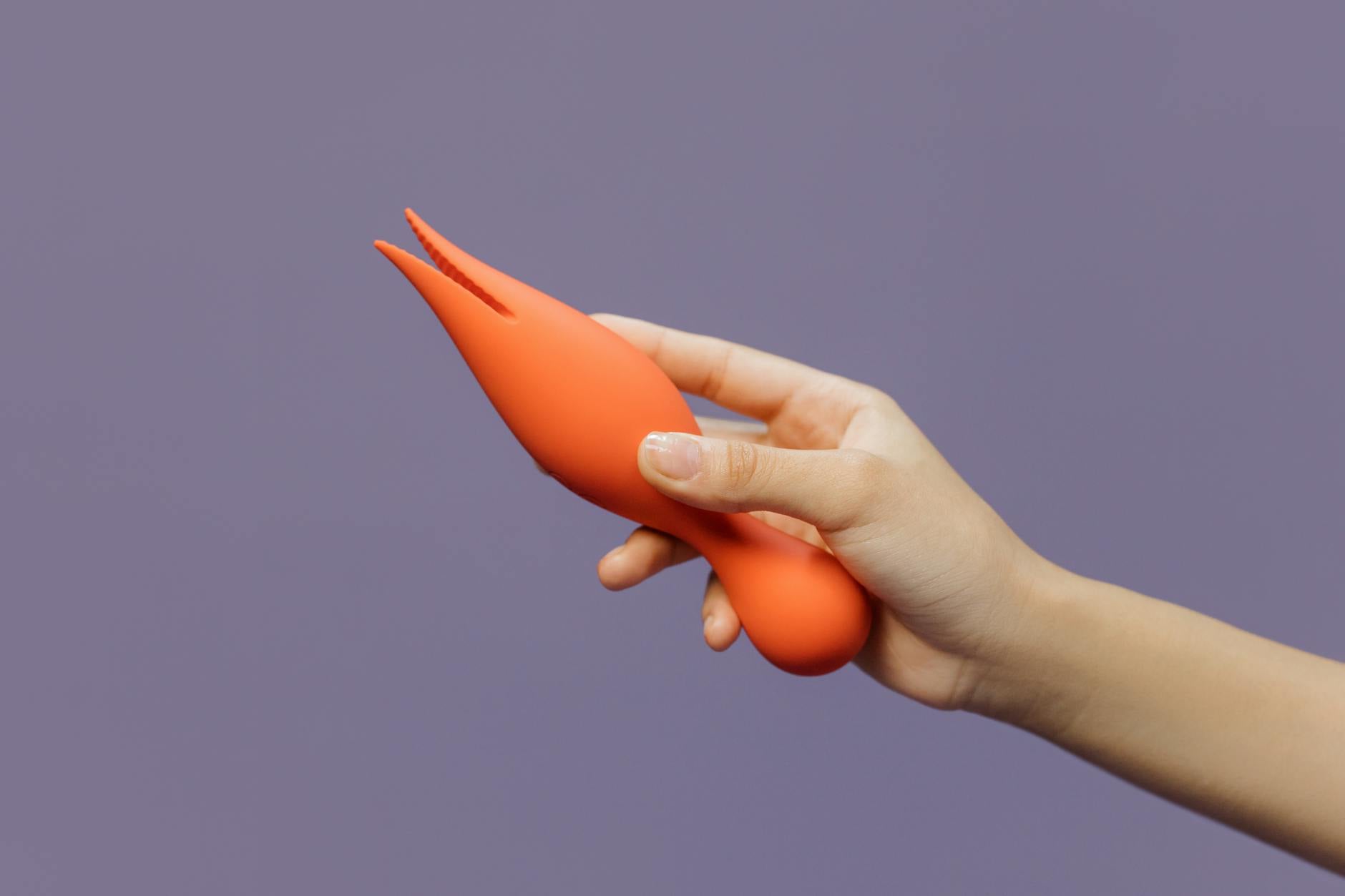
How to Use Lemon Vibrators When Partner Touches Feel Disconnected During Busy Seasons
Let's be real. When work explodes or life gets hectic, physical touch disappears first. One of you is traveling, the other is managing kids and a deadline, and suddenly you're living in the same house like roommates. You want connection. Your partner wants connection. But by the time you're both in bed, you're too tired to navigate the awkwardness of restarting something that's gone cold.
This is where lemon vibrators step in, not as a replacement for partner touch, but as a bridge back to it.
I've worked with couples for decades, and I've noticed something consistent. The partnerships that maintain pleasure during chaos tend to stay closer emotionally, even when physical touch temporarily drops off. A lemon clitoral vibrator becomes a tool that keeps you in your own body, reminds you what sensation feels like, and actually makes it easier to reconnect with your partner when things settle.
Why touch disconnects during busy seasons
It's not about love. It's about bandwidth. When your nervous system is in survival mode, pleasure gets deprioritized. Your body is literally less receptive to subtle touch because you're running on cortisol and adrenaline. You need something that works faster, requires less setup, and doesn't demand your partner to be in the exact right headspace at the exact right moment.
This is also when touch starts feeling obligatory instead of pleasurable, which kills the whole thing. You both sense it. Nobody wants to initiate something that feels like another task on the list.
The secondary issue is that when you've stopped touching, restarting feels harder than it should. There's an awkwardness. A hesitation. Will it feel good anymore? Do I still know how to do this? That hesitation alone can keep couples stuck in the no-touch zone for months.
How lemon vibrators specifically address this gap
Lemon clitoral vibrators work differently than internal vibrators. They use suction and pulsing patterns that create fast, targeted stimulation. This matters during busy seasons because you don't need 30 minutes of build-up and perfect conditions. You need something that works in 10 minutes, with minimal fuss.
When your schedule is crunched, this is everything. You can use a lemon vibrator solo, reconnect with your own pleasure, and actually remember what sensation feels like in your body. That memory is powerful. It makes you want touch again.
I'm not suggesting you hide away with your lemon vibrator instead of connecting with your partner. I'm saying that solo play keeps you tethered to your own pleasure when partner touch isn't available, which makes it easier to reach for your partner again when things calm down.
Starting solo when you feel disconnected
Your first move is solo exploration. This sounds counterintuitive when you want to reconnect with your partner, but here's why it works.
When touch has been absent, your body gets rusty. Sensation pathways that were humming along go quiet. If you try to jump straight into partner touch after weeks of nothing, it might not feel as good as you remember. That underwhelming experience can reinforce the belief that you've lost something you can't get back.
Instead, use a lemon vibrator alone for a few days. Spend 10 to 15 minutes reconnecting with what feels good in your body. Notice the sensations. Don't rush to orgasm. Just feel. This primes your nervous system to recognize pleasure again.
Start with the lowest settings. Your sensitivity might be different than it was before the busy season started. The point is to reawaken that part of yourself, not to achieve something specific.
When your partner knows you're using a lemon vibrator
Honestly, this is where couples often get stuck. One person worries that using a vibrator means they're giving up on partner touch, or that the other person will feel rejected, or that admitting "I need this to remember how to want touch" is somehow a failure.
It's not. It's actually the most direct path back to each other.
Have this conversation when you're not in bed. Say something like: "Things have been so crazy. I miss being close to you, but I've also noticed touch feels harder to initiate. I want to use my vibrator for a bit to help me remember what pleasure feels like. That's not instead of us. That's so we can get back to us." Most partners respond with relief because they've felt the distance too.
Some partners want to be involved. They might watch, or they might use it on you. That's fine. Others prefer you do this alone first. Both are valid. The key is that you're talking about it instead of hiding or making assumptions.
Building touch back in gradually
Once you've spent a few days reconnecting with your own body, you can start reintroducing partner touch. But don't jump straight to the expectation of full sex. That's how you end up back in the awkward, obligatory zone.
Instead, try this sequence.
First, non-sexual touch. Hand-holding. A hand on your shoulder while you're both making breakfast. Sleeping skin-to-skin. This rewires your nervous system to recognize your partner as safe and connected again.
Second, sensual touch that doesn't have an endpoint. Your partner might massage your shoulders, or run their hands along your arms, without it needing to become sexual. The point is touch that feels good without pressure.
Third, bring your lemon vibrator into partner moments. This is where it gets interesting. You might use it while your partner touches other parts of your body. Or they might watch while you use it, then touch you afterward. There's no script. The point is you're both present, and you're both engaged with pleasure.
This progression works because it removes the pressure for sex to happen, while keeping you moving toward connection. You're also getting used to being touched again, which makes everything easier.
What to do if your partner feels threatened
Some partners do feel threatened by vibrators, and that's worth taking seriously. Usually it's one of three things. They worry it means you don't want them anymore. They feel inadequate. Or they're genuinely uncomfortable with the object itself.
The conversation matters here. You might say: "I love what we have. Right now, I need something that helps me remember pleasure because we've been disconnected. That doesn't mean you're not enough. It means I'm trying to get back to wanting more of you." That's not negotiable language. It's just true.
If your partner is uncomfortable with the physical object, ask what they'd prefer. Some people need time before they're ready to see or think about a vibrator. That's okay. You can use it privately for now, and revisit the conversation later.
What you can't do is sacrifice your own pleasure to keep the peace. Pleasure isn't selfish. It's part of being alive. How to use a lemon vibrator when your partner feels threatened by toys goes deeper on this specific tension.
The practical timing piece
Busy seasons end. They always do. But you can't wait for life to slow down to start reconnecting. You have to build connection within the chaos, or you'll find that even when things calm down, the distance has become a habit.
Use your lemon vibrator as a small, intentional act of self-preservation. Ten minutes. A few times a week. You're not avoiding your partner. You're keeping yourself alive inside the relationship while circumstances are pulling you both apart.
Then, when the pressure eases, you're not starting from zero. You're restarting from a place where you've already remembered what pleasure feels like.
FAQ
How often should I use a lemon vibrator during a busy season to stay connected?
A few times a week is enough to keep your nervous system responsive. You're not trying to achieve multiple orgasms or prove something. You're maintaining your own sensuality while life is hectic. Consistency matters more than frequency. Three times a week for 10 minutes each beats once a week for 45 minutes.
Will using a lemon vibrator make me less interested in my partner?
No. Actually, the opposite usually happens. When you're disconnected, solo pleasure feels hollow. It reminds you what's missing. Partner touch activates reward pathways that solo play doesn't. Using a vibrator to reconnect with your own body often makes you want your partner more, because you start remembering what mutual pleasure feels like.
Can I use a lemon vibrator with my partner if we haven't been intimate in months?
Yes, but start slow. Begin with solo use for a week or two. Then introduce non-sexual touch with your partner. Then, if you want, bring the vibrator into shared moments. The vibrator isn't a shortcut past the reconnection work. It's a tool that makes the work feel less scary.
What if my partner wants to use the vibrator on me but I feel weird about it?
Speak up. There's no obligation for partner use. You might feel more comfortable using it solo first, or watching your partner use one on themselves. Consent goes both directions. You're allowed to have preferences about how this tool gets used in your relationship.
Does using a lemon vibrator during busy seasons mean we're broken?
No. It means you're human. All relationships go through seasons where connection dips. The couples that bounce back fastest are the ones who stay intentional about pleasure and touch even when it's inconvenient. You're not fixing something broken. You're actively maintaining something you care about.
How do I bring up lemon vibrators to a partner who's never considered toys before?
Start with honesty, not sales pitch. "I've been reading about this, and I think it might help us reconnect when life gets crazy. I'd like to try it. Do you have questions?" That's it. Some partners will be interested right away. Others need time. Don't oversell. Just leave the door open.
The bigger picture
Busy seasons are real, and they don't have easy solutions. But what you can control is whether you stay tethered to your own pleasure during those seasons. When you do, you're also staying tethered to your partner, even when physical touch is scarce.
A lemon clitoral vibrator is just a tool. But it's a tool that says: I matter. My pleasure matters. Our connection matters, even right now, even when everything feels impossible.
That's the piece that keeps couples together.