
How to Use a Lemon Vibrator When Your Partner Feels Threatened by Toys
Let's be real. You've thought about it. Maybe you've even mentioned it once, casually, and watched your partner's face shift. The defensiveness came fast. "You don't need that. I can make you feel good." Or worse, the quiet sting of "Are you saying I'm not enough?"
Here's what I know after two decades of couples therapy: that response has almost nothing to do with the toy.
It's rooted in fear. Fear that they're being replaced, that you'll prefer it, that your pleasure is a referendum on their value as a partner. And that fear is real and understandable, even when it's completely unfounded.
The good news? This is fixable. Not by hiding your desire for a lemon vibrator or abandoning it. But by naming what's actually happening and rebuilding trust around pleasure as something you do together, not something that happens to you separately.
Why partners feel threatened (and what's actually going on)
Most people grow up believing one person is supposed to provide all of another person's pleasure. Movies reinforce it. Your parents' generation probably modeled it. The cultural script says: if you really love me, I should be enough.
It's a wildly unfair standard that collapses under any scrutiny. You wouldn't expect one person to provide all your intellectual stimulation, all your physical activity, all your social connection. But sex? For some reason, that's where people expect total self-sufficiency from their partner.
When you bring a lemon clitoral vibrator into the conversation, your partner hears: "You're not enough." What's actually happening is that your nervous system sometimes needs different kinds of stimulation than manual or penetrative touch provides. The clitoral suction of a toy like the Lem is fundamentally different from what fingers or a body can do. It's not better or worse. It's different.
Your partner's insecurity isn't stupid. It's wounded. And if you come at this defensively ("Well, I want one, and that's that"), you'll trigger more defensiveness, not less.
The conversation you actually need to have
Timing matters here. Not during sex, not mid-argument, not when they're already feeling insecure about something else. Pick a calm moment, maybe over tea or a walk, somewhere you're not facing each other directly. Side-by-side conversations feel less confrontational.
Start with something true: "I want to talk about something, and I know it might feel awkward, but it matters to me, and I think it'll actually bring us closer."
Then be specific about what you're NOT saying. "I'm not saying you're not enough for me. I love how you touch me. And I also want to explore what my body responds to on its own. That's not about you. It's about understanding myself better."
Then explain the actual difference. If you're interested in a lemon sucker or clitoral vibrator, it's worth saying why: "The way air-pulse toys work is really different from touch. I read about how they stimulate differently, and I'm curious what that feels like. It's not something your body can replicate, and that's okay." This is factual and removes the comparison trap.
Then, crucially, invite them in. "I'd love if you'd use this with me. We could explore it together. Or if that feels weird now, I respect that. But I do want to use it, because my pleasure matters." This last part is important. You're not asking permission. You're stating your intention and offering partnership.
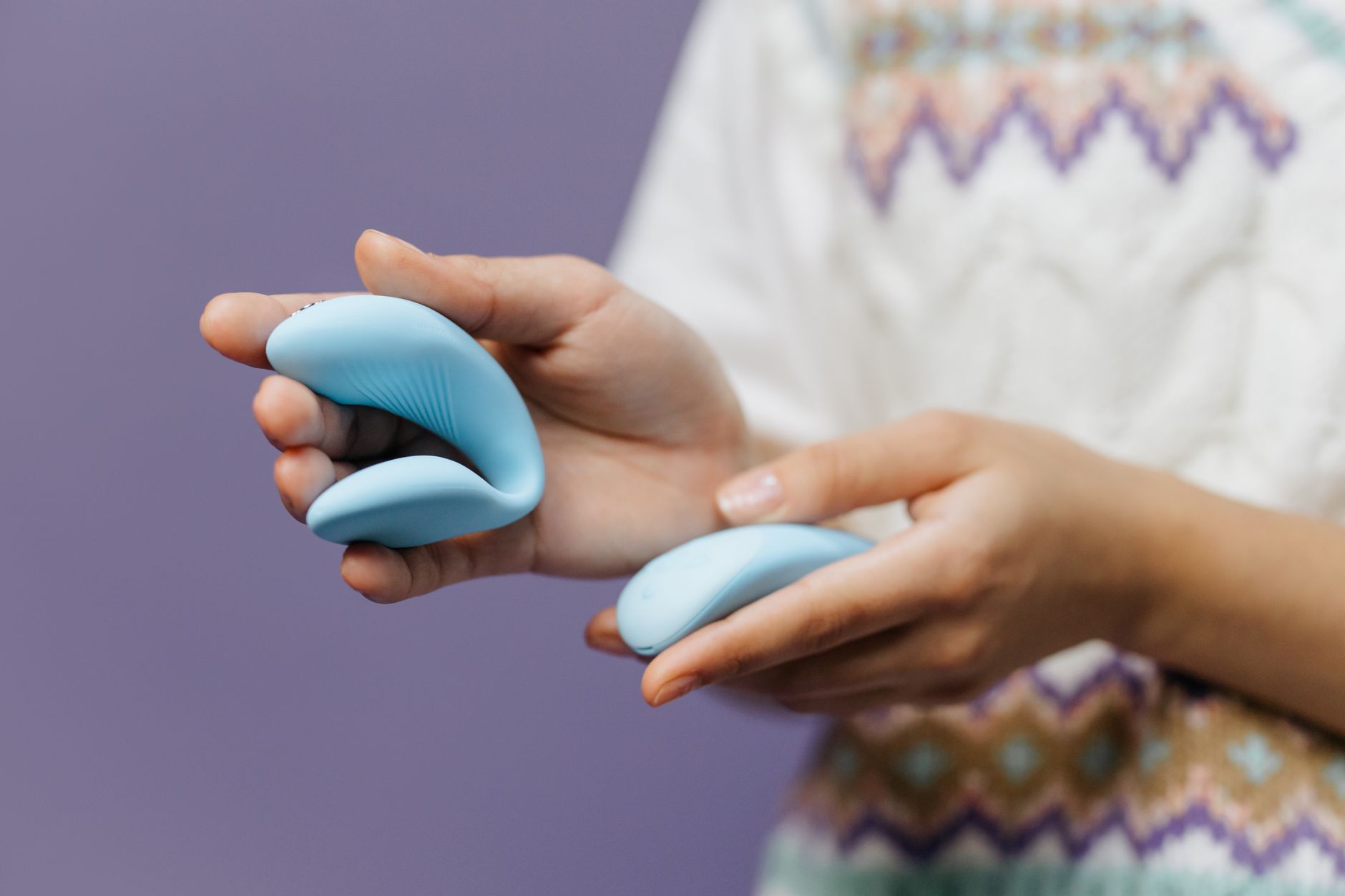
Photo by cottonbro studio on Pexels
What often happens after the talk
Your partner might say they need time. Let them have it. They might get curious and want to watch or participate. Great. They might remain uncomfortable for a while. That's normal too.
What you're doing in this phase is separating your pleasure from your partner's ego. That sounds harsh, but it's actually the kindest thing you can do. It removes the burden from them to be everything and tells them that your satisfaction isn't their sole responsibility.
Most partners relax once they realize the toy isn't a threat to the relationship. It's an addition to it. You're not using it instead of them. You might use it before they arrive, or together during foreplay, or solo when they're not interested in sex but you are. These are all normal variations, and they're actually healthier than pretending desire only happens on a mutually convenient schedule.
If your partner is interested in trying it together, that can be incredibly bonding. Watching someone you love discover something that makes them feel good? It's actually deeply erotic and builds intimacy. You might use a lemon vibrator while they touch you elsewhere, or while they're inside you, or while you're both exploring what feels good.
The difference between solo use and partnered use
There's a practical piece here that's worth naming. A lemon clitoral vibrator is genuinely useful solo. The suction pattern and intensity of something like the Lem gives you the kind of direct stimulation that's hard to replicate with a partner. But that doesn't mean it's better than partnered sex. It's different.
Solo use is actually healthy. It teaches you what your body wants, how you prefer to be touched, what rhythm and intensity work for you. Then you bring that knowledge back to partnered sex. "I like this spot right here," or "That pressure is perfect," or "Let's try that angle again." You become more able to guide your partner because you know your own body better.
Partnered use is different again. If your partner is curious, using the lemon sucker together can be playful and exploratory. Maybe they use it on you while kissing your neck. Maybe you use it while they're focused on touch elsewhere. The novelty and the collaboration often feel more intimate than either would solo.
The research on couples and toys is pretty clear: couples who use toys together report higher satisfaction and more communication overall. The toy becomes a conversation starter, not a threat. It's a tool that says, "Let's figure out what feels good. Let's not assume we know all the answers."
When your partner stays resistant
Sometimes people soften. Sometimes they don't. If you've had the conversation, been clear about your boundaries, and your partner still refuses to engage with the idea, you have a choice.
You can use it anyway. Your body, your pleasure. If that's the boundary you need to set, set it. Some people find that once their partner sees them using a toy without the world ending, the threat level drops. Familiarity breeds acceptance.
Or you can explore what's really going on beneath the resistance. Is it about toys, or is it about control? About feeling left out? About deeper insecurity in the relationship? If the resistance is paired with other patterns (not valuing your pleasure generally, controlling what you wear or do, constant criticism), that's a different problem that a vibrator won't solve.
Making it less scary
If your partner is willing to try but genuinely nervous, here are practical steps:
Let them hold the toy first, feel how it works, see that it's just a small, elegant device. Not a threat. A lemon vibrator is designed beautifully. The Lem is sleek and intentional, not intimidating.
Use it on yourself first while they watch. Let them see that you're the same person after. You don't change. You don't forget about them. You're just more relaxed and more satisfied.
Talk about what you're experiencing. "This feels like pressure without the friction." "The pulsing is hitting the right spot." Narrate it. It removes the mystery and makes it collaborative instead of secretive.
Invite them into the next step at their pace. "Would you want to try touching me while I use it?" Or "Want to lie next to me while I use it?" Small steps build trust.
The reframe that actually works
Here's what I tell couples in my practice: your partner's pleasure is not a threat to your value. And your partner's pleasure is not your responsibility to provide alone.
When you use a lemon clitoral vibrator, you're not rejecting your partner. You're honoring yourself. You're saying, "My body matters. My satisfaction matters. And I'm willing to invest in understanding what I need."
Most partners, when they truly understand this, feel relieved. Not rejected. The pressure to be everything lifts. They get to be a really good partner instead of an impossible one.
Then something often happens: they become more curious about your pleasure, not less. They want to know what feels good. They want to watch, or help, or just be present. Because now it's not a referendum on their sufficiency. It's collaborative exploration.
If your partner can't get there, that's information too. It tells you something about their capacity for your autonomy, your growth, your pleasure as separate from their ego. That's worth thinking about, particularly in long-term relationships.
Moving forward
Introducing a lemon vibrator doesn't have to blow up your relationship. It actually has the potential to deepen it, if you approach it with honesty instead of defensiveness, and if you're willing to have the uncomfortable conversations.
Your pleasure matters. Your partner's insecurities are worth taking seriously. Both can be true at once.
If you're still stuck in the conversation or want more help navigating how to rebuild intimacy around this, we're here. Reach out anytime.
People also ask
Will using a vibrator make me less sensitive to my partner's touch?
No. Your sensitivity doesn't get used up. If anything, learning what direct clitoral stimulation feels like can help you guide your partner more effectively during sex. You'll know what pressure and rhythm work for you, which means more satisfying partnered experiences overall. The two kinds of touch are different channels, not competing ones.
Can I hide a lemon vibrator from my partner, or is that dishonest?
Technically you can. Whether you should depends on your relationship values. In my experience, secrecy almost always comes out and feels worse retroactively than a direct conversation would have felt upfront. If you feel you can't tell your partner about your pleasure, that's worth examining. Either you need a conversation about boundaries and autonomy, or the relationship has a deeper trust issue worth addressing.
What if my partner wants to use the lemon toy on me but I feel self-conscious?
Self-consciousness is normal at first. It helps to remember that your partner is curious about your pleasure because they care about you, not because they're judging you. Start in lower light if that helps. Focus on the sensation rather than being watched. Most people find that after the first time, the self-consciousness fades because nothing bad happens. You just feel good.
If we use a lemon vibrator together, does that mean our sex life is broken?
Not at all. It means you're interested in exploration and variety, which are actually signs of a healthy sex life. Long-term couples who incorporate toys often report higher satisfaction than those who stick to the same routine. Novelty, even just the novelty of a clitoral vibrator like the Lem, can reignite interest and playfulness.
My partner says toys are "cheating." How do I respond to that?
Gently but firmly: they're not. Cheating involves betrayal, secrecy, or breaking agreed-upon boundaries. Using a vibrator is none of those things. If your partner thinks it is, that's a values conversation worth having. But it's not inherently true. Most relationship therapists and sex educators agree that solo or partnered toy use is a normal part of sexual exploration, not infidelity.
Will my partner enjoy using a lemon vibrator with me if he's never considered toys before?
Maybe. Curiosity varies. But many partners who were skeptical become fans once they see how much pleasure it brings their partner. The eroticism of watching someone you love feel good is often more compelling than the abstract idea of toys. Start with the conversation, not the pitch. Let curiosity build naturally.
If you're navigating this and need support, whether it's about communication with your partner or your own relationship dynamics, reach out. We're here to help you build intimacy that works for both of you.