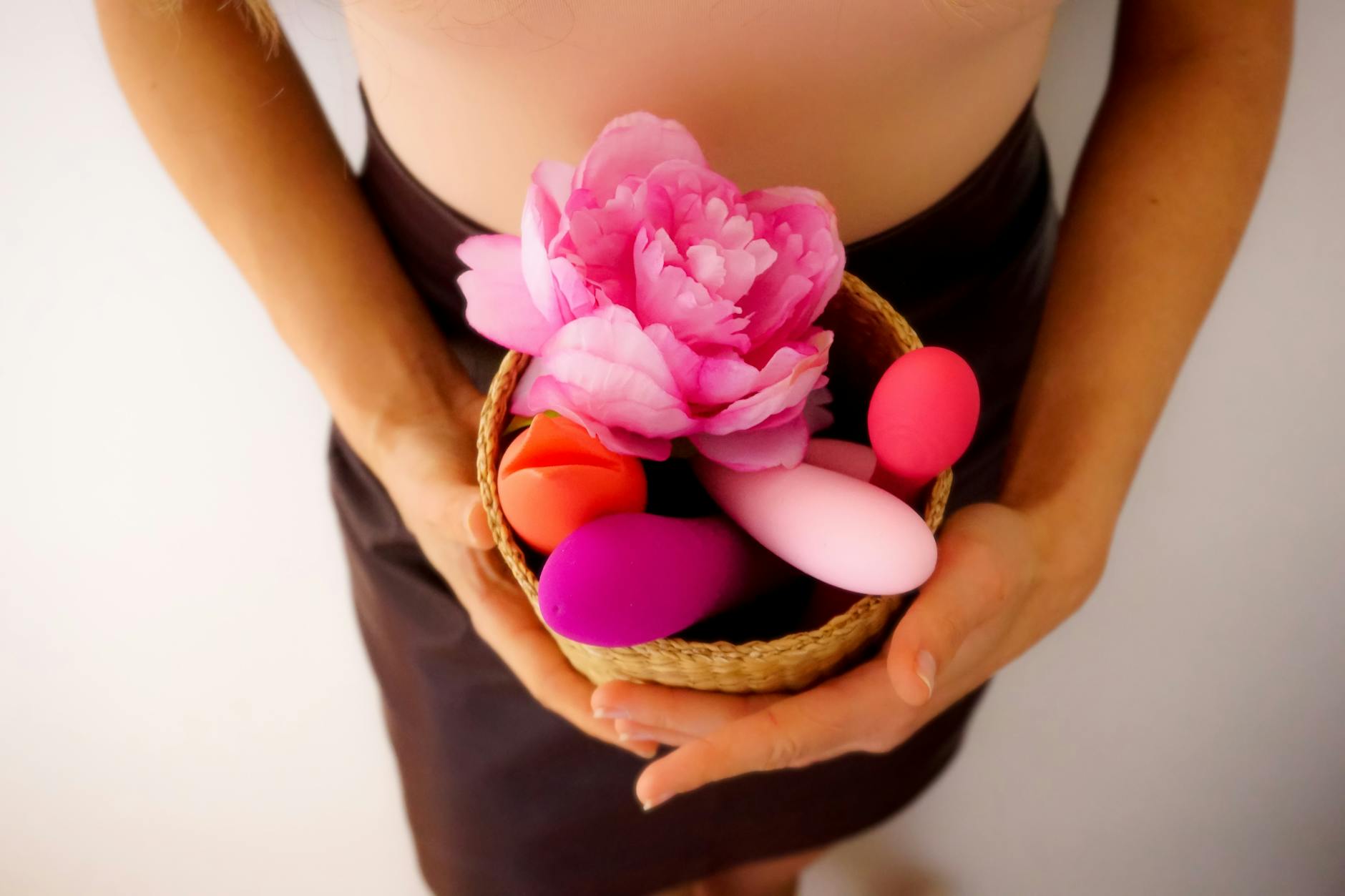
Your cycle isn't just about hormones, it's about pleasure
If you've noticed your lemon vibrator feels wildly different depending on the week, you're not imagining it. Your clitoral tissue responds directly to estrogen and progesterone, which means your sensation literally changes across your cycle. That's not a bug, it's actually useful information.
Most pleasure guides either ignore the cycle entirely or treat it like a fertility chart. What they skip is the practical reality: knowing when your body is most and least sensitive to stimulation helps you choose the right intensity, duration, and technique for that specific week.
The follicular phase: heightened sensitivity and faster arousal
Days 1 through 10 (roughly), estrogen is climbing. Your clitoral tissue swells slightly and becomes more engorged. Nerve endings sit closer to the surface. Blood flow increases, which means tissues are already partially aroused before you even start.
What this feels like: your lemon clitoral vibrator might feel stronger than usual. You might orgasm faster. You might enjoy patterns you usually skip. Some people find they need less warm-up time. Others say their orgasms feel more full-body rather than localized.
How to adjust: during this phase, start on patterns 2-4 instead of your usual 1-2. If you normally use your lemon vibrator for 10 minutes, you might finish in 6. The intensity doesn't need to climb as high because your body's already doing some of the work. Some people use this window to experiment with longer sessions or multiple orgasms, since the refractory period is shorter.
This is also when air-pulse sensation feels most pronounced. If you've ever wondered why certain settings on a lem vibrator feel almost too intense one week and perfect the next, the follicular phase is your answer.
Ovulation: the peak sensitivity window
Around day 14, testosterone spikes alongside estrogen (yes, people with cycles produce testosterone too). This is the sweet spot for raw clitoral sensitivity. Tissue is maximally engorged, nerve firing is fastest, and arousal can happen almost instantly.
What this feels like: your clitoral vibrator might feel almost too intense on settings you usually love. Orgasms can arrive suddenly. You might feel more sensation in surrounding tissue, not just the clitoris. Some people describe a deeper, more radiating pleasure. Others say their usual routine feels too stimulating and they need to dial back.
How to adjust: this is the week many people drop a pattern or two in intensity. If you usually sit at pattern 4, try 3. If you prefer 5-minute sessions, extend to 8 to let arousal build more slowly. The reason: when your body's already halfway to orgasm, aggressive stimulation can actually shut pleasure down. Your nervous system gets overstimulated and sensation flattens.
This is also when you might notice your lemon vibrator feels different pressure-wise. Air-suction sensation can feel deeper and more spreading during ovulation. If you've been curious about trying higher pulse patterns, ovulation week might feel too sensitive. Save that experiment for the follicular phase.
The luteal phase, first half: hormonal transition
Days 15 through 21, progesterone is rising and estrogen is starting to fall. Your body is already shifting, but you might not notice it yet. Clitoral sensitivity is still present but beginning to soften. Arousal takes slightly longer. The sensation feels less sharp and more rounded.
What this feels like: your lemon clitoral vibrator starts feeling gentler than it did at ovulation. You might need longer warm-up time. Orgasms are still accessible but require more deliberate attention. You might find yourself wanting longer sessions because the journey feels good, not just the destination.
How to adjust: return to your baseline intensity. If your follicular baseline is pattern 3, go back to that. Give yourself 12-15 minutes instead of rushing. Some people find that this is the best week for partnered use, since the slightly slower arousal matches well with communication and foreplay. Your lemon sucker sensation becomes more about sustained pleasure than quick intensity.
The luteal phase, second half: deeper sensation
Days 22 through 28, progesterone dominates and estrogen is low. Clitoral tissue is less engorged. Blood flow has decreased. Sensation feels duller, flatter, sometimes almost muted compared to earlier in the cycle.
What this feels like: your lemon vibrator might feel weak. You might struggle to feel much at all. Orgasms feel more distant. Some people describe this week as numb or even like they're observing pleasure rather than experiencing it. Others say sensation shifts from the clitoris to deeper internal tissue. This is also when arousal anxiety peaks because the disconnect between what you expect to feel and what you're actually feeling can feel discouraging.
How to adjust: this is the week to increase intensity thoughtfully. Move up one pattern. Increase warm-up time to 15-20 minutes. Consider using your lemon vibrator for longer total sessions. Some people find that focusing on slower patterns with longer holds (rather than rapid pulsing) creates more sensation in the luteal phase. If you usually prefer air-pulse patterns, this might be the week to experiment with vibration-only settings.
Crucially, this is not a failure. Your body isn't broken. This is normal luteal phase dimming, and it's temporary. Understanding it prevents the shame spiral that often happens when pleasure feels out of reach.
How to actually track your own pattern
Your cycle might not match the textbook timing, and that's fine. Here's what works: for the next two cycles, jot down a single note each time you use your lemon clitoral vibrator. Write the date, the pattern you used, and a one-word vibe: easy, perfect, intense, flat, etc. After two months, you'll see your pattern. You might find that ovulation sensitivity peaks a day earlier or later than expected. You might notice that the luteal dip happens sooner. That personalized map is worth infinitely more than a generic calendar.
Some people also find that where they are in their menstrual cycle affects not just clitoral sensitivity but also their interest in partnered pleasure. That's worth tracking too. When you're understanding your pleasure cycle, you're also understanding what kind of intimacy feels right for each phase.
Why the lemon vibrator works across all cycle phases
One reason the lem vibrator and other hello nancy lemon sexual toys became so popular is that they use air-pulse technology, not just raw vibration. That means they work across the full spectrum of clitoral sensitivity. During sensitive weeks, you lower the pattern. During muted weeks, you raise it. The toy adjusts to your body instead of forcing your body to adjust to it. That's wildly different from toys with fixed intensity.
The medication and cycle interaction you should know about
If you take hormonal birth control, you might not see these cyclical shifts at all. Hormones stay relatively flat, so clitoral sensitivity stays relatively steady. Some people find their pleasure life actually improves on birth control because there's no sensitivity swing. Others say they miss the natural rhythms and find pleasure less dynamic.
The same applies if you're on antidepressants or other medications that affect blood flow or sensation. Progesterone-only birth control (the mini pill) creates smaller hormonal shifts than combined birth control, which means smaller sensitivity swings. This is worth knowing not because one option is better, but because it helps explain why your lemon vibrator might feel different if you change medications.
The rest of your body changes too
Clitoral sensitivity isn't the only shift. During your follicular phase, your pain tolerance is higher and blood flow to genital tissue is faster. During your luteal phase, you're more sensitive to pressure and your threshold for discomfort lowers. That's why some people find that positions or techniques that feel fine during week one feel uncomfortable during week four.
It also means that if you have any pelvic floor tension or sensitivity, the luteal phase is when it usually peaks. That's relevant if you're using your lemon vibrator when you have pelvic floor tension. Understanding where you are in your cycle helps explain why some sessions feel smooth and others feel resistant.
What to do when your partner's cycle doesn't align with yours
If you're using your lemon vibrator with a partner or multiple partners, cycle mismatch is real. One of you is in peak sensitivity while the other is in the muted luteal phase. This is partly why lemon clitoral vibrators feel different with multiple partners. The toy stays constant, but the bodies using it are in different hormonal states. Knowing that removes shame and makes space for honest communication about what each person needs.
When to ignore the cycle timing
All of this assumes a standard 28-day cycle with predictable sensitivity shifts. Your cycle might be 22 days or 35 days. You might have PCOS or endometriosis, which flatten the hormonal curve. You might be on medication that eliminates the cycle entirely. You might be approaching menopause, where the sensitivity swings get wilder before they settle. You might have trauma history where certain points in your cycle trigger dysregulation unrelated to actual hormonal sensitivity.
The point isn't to force yourself into a framework that doesn't fit. It's to notice what actually happens with your body and your lemon sucker or other lemon vibrator when you use them. That observation is worth more than any general rule.
FAQ: Cycle, sensitivity, and lemon clitoral vibrators
Do all lemon vibrators feel the same across your cycle?
No. Air-pulse lemon clitoral vibrators like the Lem are particularly noticeable during cycle shifts because you can lower and raise the pattern. Fixed-intensity toys feel more intense during sensitive weeks and duller during muted weeks with no adjustment option. That's why adjustability matters.
Is it normal for your clitoral vibrator to feel too intense during ovulation?
Completely. Peak sensitivity week is when stimulation hits fastest and deepest. Lowering the pattern one or two notches usually solves it. If intensity is still overwhelming, try longer warm-up time without the vibrator before you start.
Can cycle sensitivity affect how you feel about your lemon vibrator as a whole?
Yes. If you buy a new toy during the luteal phase, you might feel like it doesn't work well, then feel amazing about it when you hit the follicular phase. That's not the toy, that's your body's sensitivity. Give new lemon sexual toys a test run across at least one full cycle before deciding if they're right for you.
What if your cycle is irregular or you're on hormonal birth control?
If you don't have a natural cycle, tracking sensation weekly still works. You might find your sensitivity is more stable and consistent, which some people prefer. Your lemon vibrator will work the same way, just without the monthly peaks and valleys.
Does using a lemon vibrator affect your cycle?
No. Vibration doesn't change hormones or cycle timing. You're not going to delay or rush your period by using a clitoral vibrator during any phase.
Should you avoid using your lemon clitoral vibrator during certain cycle phases?
There's no medical reason to avoid it. If sensation feels flat during the luteal phase and you don't enjoy that, you can skip that week. But plenty of people find slow, long sessions during the luteal phase deeply satisfying. It's about preference, not necessity.
Understanding your body is the real magic
The lemon vibrator is a tool. Your cycle is information. Put the two together and you get actual pleasure literacy instead of guessing. That's the difference between using a vibrator and understanding how pleasure works in your specific, cyclical, beautifully complicated body. Want more on pleasure and timing? Reach out if you'd like personalized guidance.