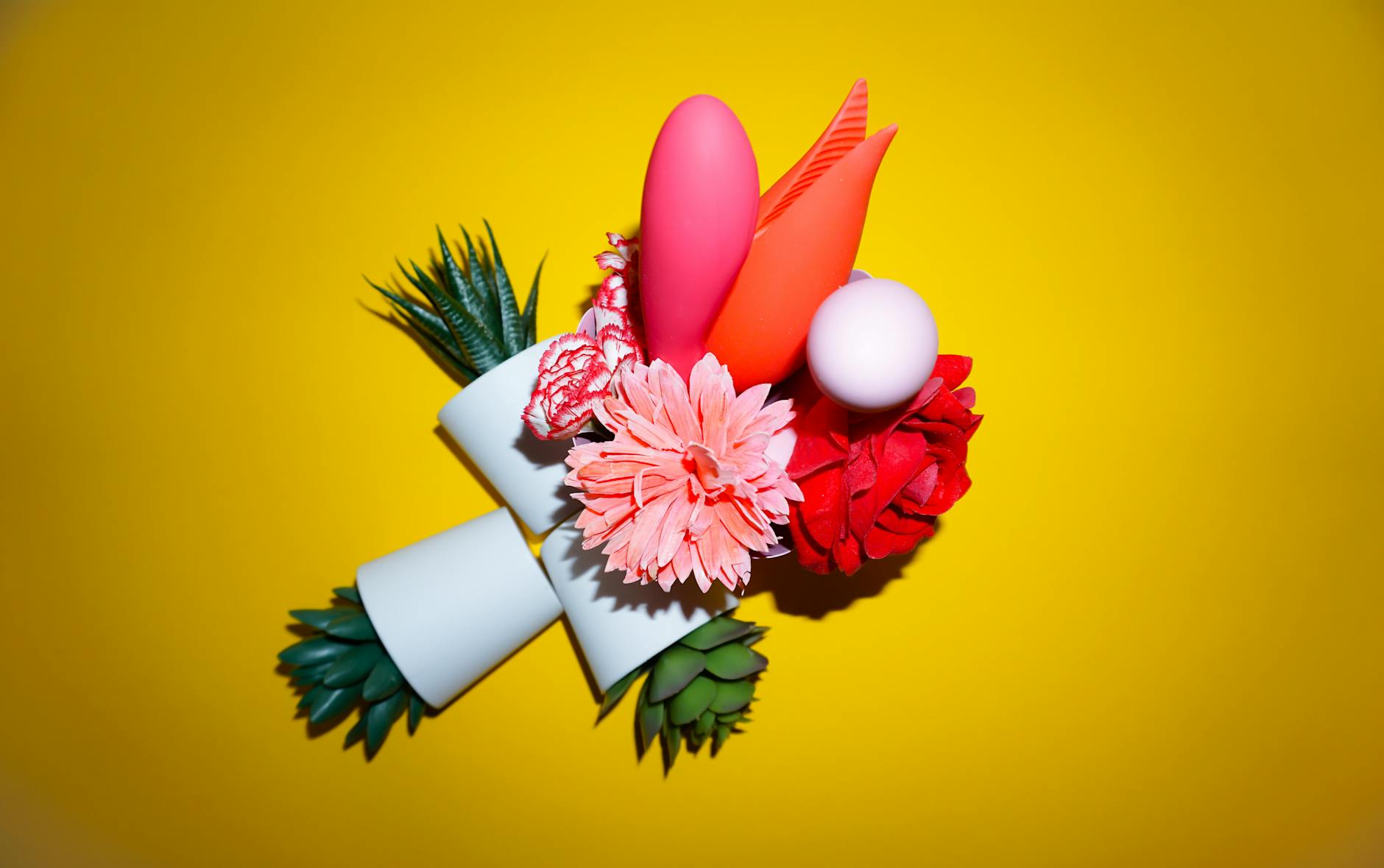
Let's talk about what nobody mentions
You buy a lemon vibrator because it works for someone else, or because the reviews are glowing, or because you're tired of guessing. Then you turn it on and one of two things happens: it's too much, too fast, too overwhelming. Or it's not enough. You're waiting for something to shift and it never does. Both are completely normal. What's actually happening is that your clitoral sensitivity doesn't match the default settings.
This isn't a you problem. It's a mismatch problem. And it's fixable.
What clitoral sensitivity actually means
Clitoral sensitivity isn't one thing. It's several things layered together, and understanding the difference changes everything about how you use a lemon vibrator.
First: nerve density. Your clitoris has around 8,000 nerve endings, but they're not evenly distributed. Some people have more concentrated sensitivity in the glans (the tip), others across the whole external structure. This is partly genetic and partly shaped by years of how you've touched yourself.
Second: pain threshold. This is separate from sensitivity. You can be extremely sensitive and have a high pain threshold (you feel everything but it doesn't hurt), or low threshold and lower sensitivity (less feeling but what you do feel is intense). A lemon vibrator can feel overwhelming not because it's too intense but because your nervous system is calibrated to perceive it as invasive.
Third: habituation speed. Your nerve endings get used to stimulation. Some people hit a plateau fast. Others stay responsive across longer sessions. This affects which patterns and speeds work best.
The three sensitivity profiles
Direct sensitivity (the alert profile)
You feel everything immediately. Direct contact with the clitoral glans is almost always too much. Vibration at even pattern 2 or 3 on a lemon vibrator can feel sharp or buzzy rather than pleasurable.
What works: Start with the lemon vibrator positioned slightly off to the side, or apply light pressure with the hood pulled forward so the stimulation is indirect. Most people in this category do best with slower patterns (1-4) and lower speeds. The suction-style stimulation that makes lemon vibrators distinctive actually helps here because it's less directly abrasive than traditional vibration.
Why this matters: Direct sensitivity often gets misread as low arousal or low capacity for pleasure. It's neither. It's just that your nerve endings need more finesse, not more power.
Diffuse sensitivity (the pattern person)
You need a bit more oomph to feel things clearly, but once you're warmed up, specific patterns land harder than raw speed. Steady vibration bores you quickly. You're chasing the right rhythm, not the right intensity.
What works: Patterns 4-7 on a lemon vibrator usually hit better than pure speed modes. The pulsing, rolling, or escalating patterns create variation that keeps your nerve endings engaged. You can handle more direct contact than someone with alert sensitivity, but you still need that pattern element.
Why this matters: If you're using a vibrator set to constant buzz, you're working against your own wiring. Your pleasure lives in the rhythm, not the hum.
Deep sensitivity (the building profile)
Light touch doesn't register much. You need sustained, building stimulation to feel arousal shift. Direct contact feels fine. You prefer speed over pattern, and you can tolerate intensity that would overwhelm someone else.
What works: Patterns 1-4 might feel too subtle. Start at pattern 5 or higher, or use the speed-only modes and work up to sustained intensity over 10-15 minutes. Your clitoris needs time and pressure to wake up fully. More direct contact is usually fine.
Why this matters: Deep sensitivity isn't "less" sensitivity. It's just sensitivity with a longer build time. Switching to the right settings means you're not exhausted from chasing sensation that never quite arrives.
How to identify your profile (without guessing)
Spend one session experimenting. No goal. No pressure for orgasm.
Start with clean hands and a water-based lube. Hold the lemon vibrator against your clitoris with zero pressure at pattern 1. Wait 30 seconds. Notice: Does this feel pleasant? Noticeable? Irritating?
Move to pattern 3. Then 5. Then 7. Don't rush. Spend 20-30 seconds at each level.
Now repeat with gentle to medium pressure. Different feel? Aha. That tells you something important about your threshold.
Finally, pick one pattern that felt closest to "yes, more of this" and use it for 5-10 minutes. Does it sustain? Does it build? Does it plateau fast?
You just mapped your sensitivity. That's your starting point.
The settings that actually work
For direct sensitivity
Begin at pattern 1 or 2. These are slower, with gentle escalation. Place the lemon vibrator beside your clitoris rather than directly on it. Let the sensation build for 10-15 minutes. Many people find patterns 3-5 become more pleasurable once arousal kicks in, so you can climb as your body settles.
If direct contact feels good after warm-up, great. If not, that's information. Some people stay most comfortable with indirect pressure the entire time. That's completely valid.
For pattern sensitivity
Skip the straight speed modes. Go directly to patterns 4-7 and spend 2-3 minutes at each to see which rhythm actually resonates. Once you find your pattern, you can increase pressure or position to add intensity without changing what feels good fundamentally.
Many pattern-sensitive people find that using the same pattern for longer sessions actually feels better than switching around. Your nervous system locks into the rhythm and goes deeper.
For deep sensitivity
Start at pattern 5 or 6, or use the speed-focused modes and begin at mid-range. Apply medium to firm pressure. Let yourself warm up for 10-15 minutes before expecting the kind of intensity you're chasing. It's coming. Your body just has a slower ignition.
You can move toward higher numbers and speeds as arousal builds, or stay with one setting and let the time do the work. Both work.
The mistake everyone makes
You get a lemon vibrator and assume you should start at the highest settings to "see what it can do." Then when it feels like too much, you assume the vibrator is too intense.
The vibrator isn't the problem. The starting point is. A quality clitoral vibrator like the Lem is designed to work across a range of sensitivities. The patterns and speeds exist for a reason. Beginning at pattern 1 isn't "boring." It's tuning. It's meeting yourself where you actually are.
When you match the right setting to your sensitivity profile, orgasm often follows naturally. Not because the vibrator got stronger. Because you stopped working against your own wiring.
How sensitivity shifts (and how to adapt)
Here's what catches people off guard: your sensitivity profile isn't fixed. It shifts.
Cycle changes can make you feel more alert or more diffuse. Medication, stress, relationship changes, aging, arousal levels. A setting that worked perfectly last month might feel flat this month. That's not failure. That's information. You just need to check back in.
Every few months, or when something changes, run that 30-second pattern test again. It takes five minutes. It keeps you from forcing a setting that no longer works and then blaming yourself or the vibrator.
This is especially true if you're working through something like rebuilding after hormonal shifts or sexual trauma. Your sensitivity profile might be genuinely different now. The lemon vibrator didn't break. You're just recalibrating.
When to reach for a different tool
A lemon vibrator is wildly versatile, but not every body responds equally to suction-style stimulation. Some people find it hits perfectly. Others prefer the more traditional vibration of something like the Uno, which focuses on consistent buzz rather than pulsing patterns.
If you've given your sensitivity profile time to settle and a lemon vibrator still doesn't feel right, that's not a sensitivity problem. That's a toy-type mismatch. Different shapes and stimulation styles work better for different nervous systems. How to Use a Lemon Vibrator When You Have Low Sensation or Numbness explores some of those variations in detail.
The permission you actually need
Your sensitivity profile is not a defect to overcome. It's not something to push past. It's the actual map of what feels good to you.
If you need patterns, use patterns. If you're most responsive to indirect contact, stay indirect. If you need 15 minutes of buildup instead of 2, take the time. Your pleasure doesn't need to look like someone else's. It just needs to feel like yours.
FAQ: Sensitivity, settings, and lemon vibrators
Why does my lemon vibrator feel less intense than I expected?
You might have diffuse or deep sensitivity, which means you need pattern variation or sustained buildup rather than immediate intensity. Start at the pattern settings instead of speed modes, or give yourself 10-15 minutes of warm-up at lower intensities. If you're on the direct sensitivity end and started too high, your nervous system might have shut down. Try pattern 1-3 with indirect contact.
Can my clitoral sensitivity change from month to month?
Completely. Cycle changes, stress, medication, sleep, and arousal levels all affect how your clitoris responds. A setting that worked brilliantly last month might feel flat now. This isn't the lemon vibrator getting weaker. It's just recalibration time. The good news: once you understand your sensitivity profile, you know how to adjust.
Is there a "normal" sensitivity level for a lemon clitoral vibrator?
No. There's direct sensitivity, pattern sensitivity, and deep sensitivity, and they're all normal. One isn't better or more correct than another. They just need different approaches. If you're comparing yourself to someone else's experience, you're looking in the wrong direction.
What if patterns feel good but pure vibration doesn't?
You're pattern-sensitive. That's your answer. Stick with patterns 4-7, give them time, and stop trying to make straight vibration work for you. It won't. Your nervous system prefers rhythm. Honor that.
Does sensitivity affect orgasm timing?
Yes, indirectly. Deep sensitivity usually takes longer to build to orgasm. Direct sensitivity sometimes comes faster but needs the right approach to feel like pleasure instead of overwhelm. Pattern sensitivity rides the rhythm and can plateau or breakthrough depending on variation. Understanding your profile helps you stop trying to force faster or stronger orgasms and instead work with your actual timeline.
Should I start on the lowest setting every time?
Not necessarily. Once you know your sensitivity profile, you can start where that profile tells you to start. But on first use, with new partners, during cycle shifts, or after stress, going slow is always smart. Your body will tell you when you're ready to climb.
The real insight
A lemon vibrator isn't one-size-fits-all because clitoral sensitivity isn't one-size-fits-all. The patterns, speeds, and design of the Lem exist because bodies are different. Your job isn't to adapt yourself to the vibrator. It's to find where your sensitivity profile meets the tool and start there.
Once you do, pleasure usually follows. Not someday. Right then.
If you're still working through finding what feels right, or if sensitivity changes are connected to something bigger like hormonal shifts or medication changes, How to Use a Lemon Vibrator When Sensation Feels Muted or Delayed walks through deeper troubleshooting. Or reach out if you want to talk through your specific situation.