Let's talk about the orgasm gap
You used to finish easily. Now it takes forever, feels muted, or doesn't happen at all. And you're wondering if something's broken. Here's the thing: nothing is broken. But something has shifted, and understanding what it is makes all the difference.
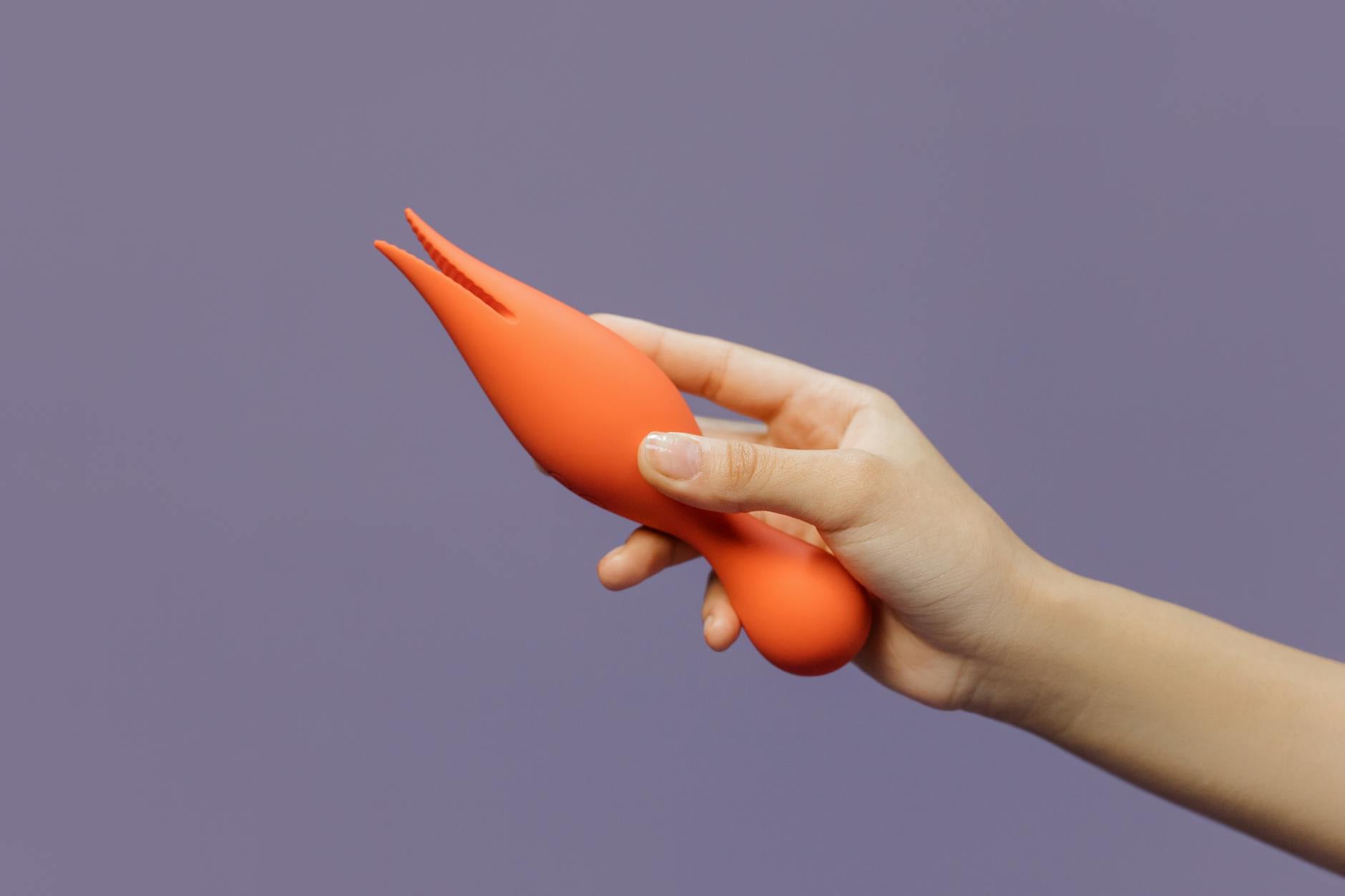
Orgasm difficulty is one of the most common pleasure problems people don't talk about. It's also one of the most fixable. A lemon vibrator, specifically something like a lemon clitoral vibrator or a lem vibrator with suction technology, can rebuild sensation in ways that traditional vibrators simply can't. But first, you need to know why this is even happening.
Why orgasms get harder to reach
Three main culprits shift how your body responds to stimulation.
Desensitization from routine. If you've been using the same toy, the same rhythm, or the same touch for years, your nerve endings adapt. They literally need novelty to fire the same way. It's not boredom in your head. It's neurological adaptation in your vulva. Your body is asking for something different.
Stress, distraction, and mental load. The brain is the largest sex organ. When it's spinning with work, family obligations, or relationship tension, arousal never gets the oxygen it needs. You're physically present but mentally fragmented. Climax becomes impossible because the neural pathways for pleasure can't complete the circuit.
Hormonal or circulatory changes. Age, medications like SSRIs, birth control shifts, or conditions that affect blood flow can all change how quickly blood fills your clitoris and labia. When engorgement is slower or less complete, orgasm feels weaker or takes longer to build.
There are also secondary players: pelvic floor tension (holding too tight blocks sensation), depression or anxiety, relationship disconnection, or simply being touched in ways that no longer land. The good news is that most of these respond well to targeted tools and techniques.
Why a lemon vibrator works differently
Here's where lemon sexual toys change the game. Most vibrators use buzzing or wand friction. A lemon clitoral vibrator like the Lem uses gentle suction and pulsing. This matters because suction stimulates the deeper nerve clusters around your clitoris. It's gentler than direct vibration but reaches further into your tissue. It also feels genuinely different from what you've been using, which can break the desensitization cycle immediately.
For people struggling to orgasm, this novelty plus depth equals faster arousal and more intense sensation. Many clients report that suction-based stimulation reaches a sweet spot that other toys just miss. It builds tension in a different part of your clitoris, creating a fuller, longer orgasm when it arrives.
The rebuild strategy: pattern and pressure
If you've been using a traditional vibrator on pattern 7 or 8, your nerves have learned to tune it out. Start over. Here's the protocol:
Week one: exploration mode. Use your lem vibrator on patterns 1 through 4. Spend 3-5 minutes on each. You're not chasing orgasm. You're mapping sensation. Notice where you feel it most intensely. Does pattern 2 create a sharper peak? Does pattern 3 feel more rolling and diffuse? Write mental notes.
Week two: add duration. Pick the two patterns that felt best. Use them for 10-15 minutes per session. Add lube. Slow down. Let arousal build gradually instead of hammering for release. Patience literally rebuilds your sensitivity. Your nerve endings need time to wake up.
Week three: stacking patterns. Once you've spent time in lower patterns, your body will naturally want more intensity. That's your cue to shift patterns mid-session. Start at pattern 2, move to 3, then 4. The alternation prevents habituation and builds intensity progressively.
Week four: context change. This is where most people miss the real shift. Change when you use your lemon clitoral vibrator. If you've always gone solo, bring it into partnered play. If you've been alone, maybe use it during mutual touch or while your partner is present. New context plus new sensation creates genuinely new neural pathways.
This isn't a quick fix. It's a recalibration. But most people notice stronger sensation within 3-4 weeks.
The mental piece nobody mentions
Technique is only half the story. The other half is presence. If you're checking your phone, thinking about email, or bracing for an orgasm that might not come, your brain is literally blocking climax. Orgasm requires a brief window of zero self-consciousness. You have to stop watching yourself and just feel.
Try this: before using your lemon sucker, spend two minutes in total silence. No phone, no screens, no partner talking. Just breath. In and out. This primes your nervous system to receive sensation instead of defending against it. Then use your lem vibrator. You might be surprised how much that 120 seconds changes things.
If you're struggling with anxiety specifically, check out our guide on how to use a lemon vibrator when you have anxiety during sex for deeper techniques on managing intrusive thoughts.
When to add lube and adjust pressure
Lube isn't optional here. Even if you self-lubricate naturally, adding water-based lube increases sensation and comfort. Suction feels incredible on slick tissue. It also protects your skin if you're doing longer sessions.
Start with light pressure. The Lem and similar lemon clitoral vibrators work through gentle suction, not crushing force. You don't need to press hard. In fact, hard pressure can dull sensation. Let the device do the work. Your job is to stay still and feel.
If you're recovering from medication-induced numbness and reduced sensation, light pressure is especially important. Your tissue is already less responsive. Gentleness creates space for sensation to return.
The partner conversation
If you have a partner, here's what they need to know: orgasm difficulty isn't about them. It's not rejection. It's also not something they can fix by trying harder or being more present. What helps is them understanding the rebuild process and holding space without pressure.
The worst thing a partner can do during this recalibration is ask "did you come?" The best thing is to let you explore with your lemon vibrator solo, trust the process, and then integrate it together once you've rebuilt your own sensation. You can't teach your partner how to touch you into orgasm if you don't yet know what works.
When to pause and seek help
Orgasm difficulty that persists beyond four weeks, or difficulty that appeared suddenly alongside other symptoms (pain, loss of desire, mood changes), deserves professional attention. A gynecologist trained in sexual medicine can rule out circulatory issues, hormonal changes, or medication side effects.
But for the vast majority of people, a shift in tools, time, and attention brings sensation roaring back. A lemon vibrator gives you the novelty and depth your nervous system has been waiting for.
People also ask
Can a lemon vibrator help if I've never had an orgasm?
Yes, but with a different goal. If orgasm hasn't happened yet, you're building sensation from the ground up, not rebuilding it. Start at the lowest patterns and spend weeks exploring without outcome pressure. A lemon clitoral vibrator's gentle suction often reaches sensation that fingers and friction toys miss. Many people experience their first orgasm with suction-based toys.
Is it normal for orgasms to feel less intense as you age?
Some change is normal. Nerve density doesn't decrease with age, but tissue thickness and blood flow can shift, especially after menopause. That said, "less intense" often means "different," not worse. Some people report their most satisfying orgasms after 40 or 50. The intensity just comes from a different place. A lem vibrator can help you find that new intensity.
How long does it take to rebuild sensitivity?
Most people notice shifts within 2-3 weeks if they're consistent. Real recalibration takes 4-6 weeks. Some changes take longer if medication or hormones are involved. Patience is the actual tool here. Your nervous system will respond if you give it time and novelty.
Should I use a lemon vibrator every day?
No. Every other day is ideal for the first month. Daily use can lead to the same desensitization you're trying to escape. Your nervous system needs recovery time to build hunger back up. After a month of rebuilding, use whatever frequency feels right. Some people do daily, others prefer a few times a week. Follow your body's cues.
What if my partner wants oral sex but I can't orgasm that way?
This is common and fixable, but it requires honesty. You might not be able to orgasm from oral alone right now. And that's okay. Many people combine oral with external stimulation from a lemon sucker, which layers sensation. You can also receive oral without orgasm as the goal. Some of the best sex isn't aimed at climax at all.
Can stress alone cause orgasm difficulty?
Completely. Stress floods your system with cortisol, which literally suppresses arousal hormones. When your nervous system is in fight-or-flight, pleasure shuts down. That's why the mental work (breathing, presence, silence before use) matters as much as the physical tool. A lemon vibrator helps, but stress management is the foundation.
The real story
Orgasm difficulty isn't a sign that your pleasure years are behind you. It's usually a signal that your body is asking for something new. A lemon vibrator, a shift in technique, and permission to slow down can bring sensation rushing back. Most importantly, it's fixable. You're not broken. You're just ready for a different approach.
Ready to start rebuilding? Reach out to our team at /contact with questions about which Nancy's Lemon product might work best for your needs.