The conversation nobody wants to have happens anyway
Here's the thing: one partner wants to bring a lemon vibrator into the bedroom. The other partner says something like "I don't know, won't that be intense?" or "What if I can't keep up?" or even "Isn't that going to make me feel inadequate?" What follows is usually silence, because now the person who suggested it feels defensive, and the person who's hesitant feels guilty for not being excited enough.
That's not a communication breakdown. That's actually the communication working exactly as it should: both of you are trying to protect something you care about.
Why gentle stimulation is not a compromise, it's a preference
Let me be direct. Some people genuinely prefer gentle sensation. They're not broken. They're not being difficult. They have a legitimate nervous system response to intensity.
This isn't about being touch-shy or needing convincing. Some people's bodies and brains are wired to find light, sustained stimulation more pleasurable than intense vibration. And honestly? That's not a problem to solve. It's a baseline to work with.
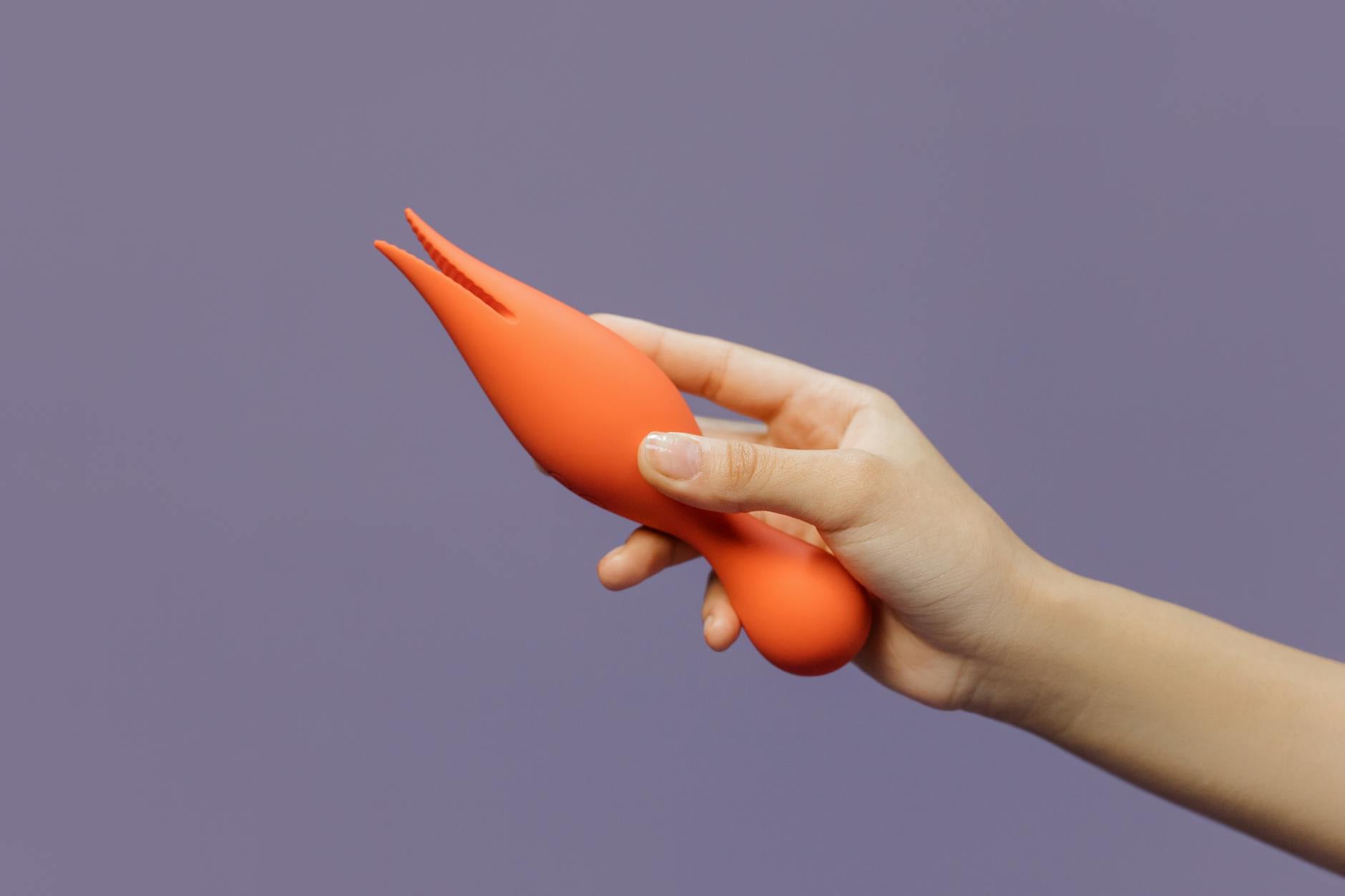
The good news: lemon vibrators are exceptional for this. The suction-based design of the lem vibrator means you can start at barely-there intensity and build gradually. There's no aggressive buzz, no one setting that feels like it might shatter your teeth. It's responsive, nuanced, and controllable in ways traditional vibrators often aren't.
The pre-toy conversation that changes everything
Before you even open the box, you need a conversation that's separate from the sexual moment. This is logistics talk, not foreplay.
One of you says something like: "I've been thinking about introducing a toy into what we do together. Not because anything's wrong, but because I think it could be fun for us. Can we talk about what you're hoping for and what worries you have?"
Then you listen. Really listen. The hesitations you hear are not objections to overcome. They're information.
Common concerns, translated:
"Won't it feel overwhelming?" This usually means "I'm worried about losing my own arousal if there's too much stimulation happening." Response: "That's why we'd start at the lowest setting. It's about building sensation together, not flooding your nervous system."
"What if I can't keep up?" Translation: "I feel like my body is already not enough, and a toy makes that worse." Response: "A toy is not a replacement. It's a sensation we experience together. You're still the person I want to be with, and that doesn't change."
"Isn't that supposed to be just us?" Translation: "I'm worried this means our sex life isn't enough anymore." Response: "Our sex life is great. I just want to explore something new with you, not instead of what we have."
These conversations feel awkward because they're honest. That's the point.
Getting started with settings and sensation
When you actually introduce the lemon vibrator, start embarrassingly low. Like, you'll think "this can't possibly do anything" low. You're aiming for sensation, not stimulation.
With the lem vibrator, most people with gentle preferences start at pattern 1 or 2 and stay there for at least 10-15 minutes. You're not building toward an orgasm at breakneck speed. You're building arousal gradually, which actually works better for partners with slower response times anyway.
Here's a practical sequence:
- Hold it nearby, not on the body. Let them hear it, feel the anticipation. This is not a step to skip.
- Touch the outside of the vulva with the toy turned off. Sensation without stimulation.
- Turn it to pattern 1 and apply light suction to a less sensitive area first (the outer labia, the pubic mound). Not directly on the clitoris.
- After 3-5 minutes of that, introduce gentle contact with the clitoral area. Still pattern 1.
- If they want more, they ask. Not you offering, not you guessing. Them asking.
This approach works because it puts the person receiving in the position of control. They're not wondering if the next move will be too much. They're asking for it.
What "working together" actually means
The biggest shift I see when couples introduce a toy intentionally is this: it stops being about one person doing something to another and starts being about two people creating something together.
If your partner prefers gentle sensation, you're now both invested in the same goal. You're not trying to convince them that intensity is better. You're not performing a sequence you read online. You're paying attention to their breathing, their body position, what they're asking for.
You can ask things like: "Should I stay here or move the toy slightly?" or "Want me to hold it steady or use small circles?" These aren't interruptions. They're the actual connection happening.
Many partners report that they become more aroused when they feel genuinely listened to, which is not a metaphor. Your nervous system responds to being treated with care. It's biology, not sentiment.
Managing your own expectations (the harder part)
If you're the partner who introduced the toy, here's where things get tricky. You might have imagined this moment very differently. Maybe you expected instant enthusiasm. Maybe you expected your partner to orgasm faster or more intensely. Maybe you wanted them to be as excited as you are.
None of that is happening, and that's not a failure.
What's actually happening is your partner is exploring something new with you while managing their own nervousness. That takes more courage than enthusiasm, honestly.
If you catch yourself frustrated because they're "taking too long" or "not reacting enough," that's a signal to pause and check in with yourself. Are you trying to make this work for them, or are you trying to make it work for your image of how this should go? Those are different projects, and only the first one involves actual partnership.
When sensation feels too much (or not enough)
Even with the gentlest approach, sometimes the toy itself creates stimulation that feels like too much. This is not a problem. This is data.
If your partner says "that's still intense," the options are: use the toy through a thin layer of fabric, hold it further away from the body, use an even lower pattern, or skip the toy and return to touch. All of these are valid endings to the conversation. None of them mean you "failed."
Alternatively, maybe the lowest setting of the lemon vibrator still feels more stimulating than you expected. Some partners prefer the sensation of touch with a toy held nearby (not in direct contact), or they prefer the visual and emotional experience of the toy without constant physical contact.
It's also possible that after trying the lem vibrator a few times, your partner realizes they actually prefer a different sensation altogether. That's not a waste. That's just information about how their body responds.
The conversation nobody talks about: what if they still don't want to?
You've had the pre-talk. You've introduced it gently. You've offered modifications. And your partner still doesn't really want it.
That's a complete and valid answer.
The question then becomes: is this a hard boundary ("I truly don't want any toys in our sexual experience"), or is it nervous-but-willing ("Maybe eventually, but I'm not ready yet")? Only they can answer that.
If it's a hard boundary, you need to decide whether toy-free partnership is something you're genuinely okay with. Not resentfully okay. Actually okay. If the answer is no, that's important information about compatibility, and it deserves an honest conversation with a therapist or counselor.
If it's nervous-but-willing, then the timeline is theirs. Not six months from now, not "let's try again next week." When they're ready, they'll tell you.
Photo by cottonbro studio on Pexels
Building arousal when you have different speeds
One of the clearest benefits of using a lemon vibrator with a partner who prefers gentle sensation is that it actually solves a very common couple problem: mismatched arousal timing. If one of you heats up quickly and the other needs sustained, gentle buildup, a toy designed for sustained low-intensity sensation bridges that gap beautifully.
The person who needs more time gets the sustained sensation they're looking for. The person who gets aroused faster stays engaged without feeling bored. You're not waiting for each other anymore.
This is genuinely why couples with different arousal speeds report that lemon vibrators work better for their dynamic. It's not that the toy makes everything instant. It's that it lets both people's nervous systems work at their actual pace.
Communication during the moment
Once you're actually using the lemon vibrator together, keep talking. Not performative sexy talk, but actual information.
"How is that feeling?" is not the right question, because it puts the other person on the spot. Better options: "Want me to stay here?" "Should I try a different pattern?" "What would feel good right now?"
They should be able to answer these without your eyes on them, which means you might want to adjust position so you're not staring at their face waiting for a reaction. Sometimes the most connected thing you can do is look away and pay attention to their body's actual response.
If they say something doesn't feel good, you're not failing. You're getting real-time feedback. That's the whole point.
After the experience: what to say
Don't ask "Did you like that?" right after. That question makes it about whether they're pleased with a performance, which is not what just happened.
Instead: "That was nice to share with you" or "I liked exploring that together" or "Let's do that again sometime." You're speaking from your experience, not evaluating theirs.
If it was awkward or uncomfortable, that's also fine to say. "That felt a bit off. Want to talk about what didn't work?" Normalizing that some experiments don't land perfectly is actually more connecting than pretending everything was hot.
For partners who are hesitant, sometimes the best part happens after the physical experience, when you're just talking about it. Vulnerability has its own arousal component.
When to bring in professional support
If you've had the conversation, tried the approach, and one of you is still deeply uncomfortable, that's worth discussing with a couples therapist. Not because something's broken, but because the discomfort might be pointing to something deeper.
Maybe it's about control or trust. Maybe it's about anxiety around sexual performance. Maybe it's about past experiences that are still shaping how your body responds. A therapist can help you both understand what's actually going on beneath the "is this toy okay" question.
This is especially true if introducing a toy triggered relationship tension you weren't expecting. That's not about the toy. That's about something in the relationship that needed addressing anyway.
The slow burn approach actually works
Here's what I've seen repeatedly: couples who go slowly with toys have better outcomes. Not faster orgasms. Better outcomes. Better communication. More genuine arousal. More actual connection.
The partners who prefer gentle sensation are not your slow network. They're your partners who actually know how to do intimacy slowly, which is increasingly rare. That's a gift, genuinely.
Introducing a lemon vibrator with someone who prefers gentle stimulation is an opportunity to slow down, pay attention, and check in. The toy is just the excuse to do what you should probably be doing anyway.
FAQs
Can you use a lemon vibrator if your partner is sensitive to stimulation?
Absolutely. The lem vibrator's suction-based design makes it particularly good for sensitive partners because you can start at extremely low intensity and build gradually. The key is starting at pattern 1 and staying there for several minutes before considering any increase. You're building arousal slowly, which actually works better for sensitive nervous systems.
What if your partner wants to watch you use the lemon toy first?
That's a great way to normalize it. Let them see how it works, how quiet or loud it is, what the patterns look like. Sometimes the anticipation and visual aspect matters more than the physical sensation. Some partners find that watching their partner enjoy the toy is itself arousing, which changes the whole dynamic from "is this safe" to "I want to be part of this."
How do you know if your partner is just nervous versus actually not interested?
Nervousness usually sounds like hesitation with curiosity underneath. "I'm worried it will be too much, but I'm kind of curious." Genuine disinterest sounds more like "I don't think this is for me," without the curiosity component. If you're unsure, ask directly: "Are you nervous because you want to try it but feel anxious, or is this just not something you want to do?" The answer will be clear.
Is it okay to use a lemon vibrator if you have a significant arousal speed mismatch?
Yes, and it's actually one of the best solutions. If one partner needs 20 minutes of buildup and the other is ready in five, using a lemon clitoral vibrator on the slower-to-arouse partner while you're both engaged together solves the timing problem beautifully. You're both getting what you need physiologically without anyone feeling rushed or bored.
What if your partner enjoys the toy but still prefers partner touch more?
That's completely normal. The toy isn't meant to replace partner touch. It's meant to enhance it or create a different sensation. Many couples find that they use toys sometimes and not other times, depending on what they're both in the mood for. Preference shifts, and that's fine.
How often should you try the lemon vibrator if your partner is hesitant?
Let them set the pace. If they're nervous, introducing it once every two weeks or even monthly is fine. You're not trying to convince them to like it. You're slowly familiarizing them with it until it stops feeling like a weird thing happening and starts feeling like a normal option in your repertoire. That usually takes several experiences spread over time.
In the meantime
If you're bringing a lemon vibrator into a partnership where one person prefers gentle sensation, you're actually doing something harder and more valuable than just introducing a toy. You're learning to communicate about pleasure, to listen to your partner's actual needs instead of your imagined ones, and to slow down enough to notice what's really happening between you.
That's not a compromise. That's advanced partnership.
Want to talk through your specific situation or need more guidance on navigating toy introduction with your partner? Reach out to us—we're here to help.