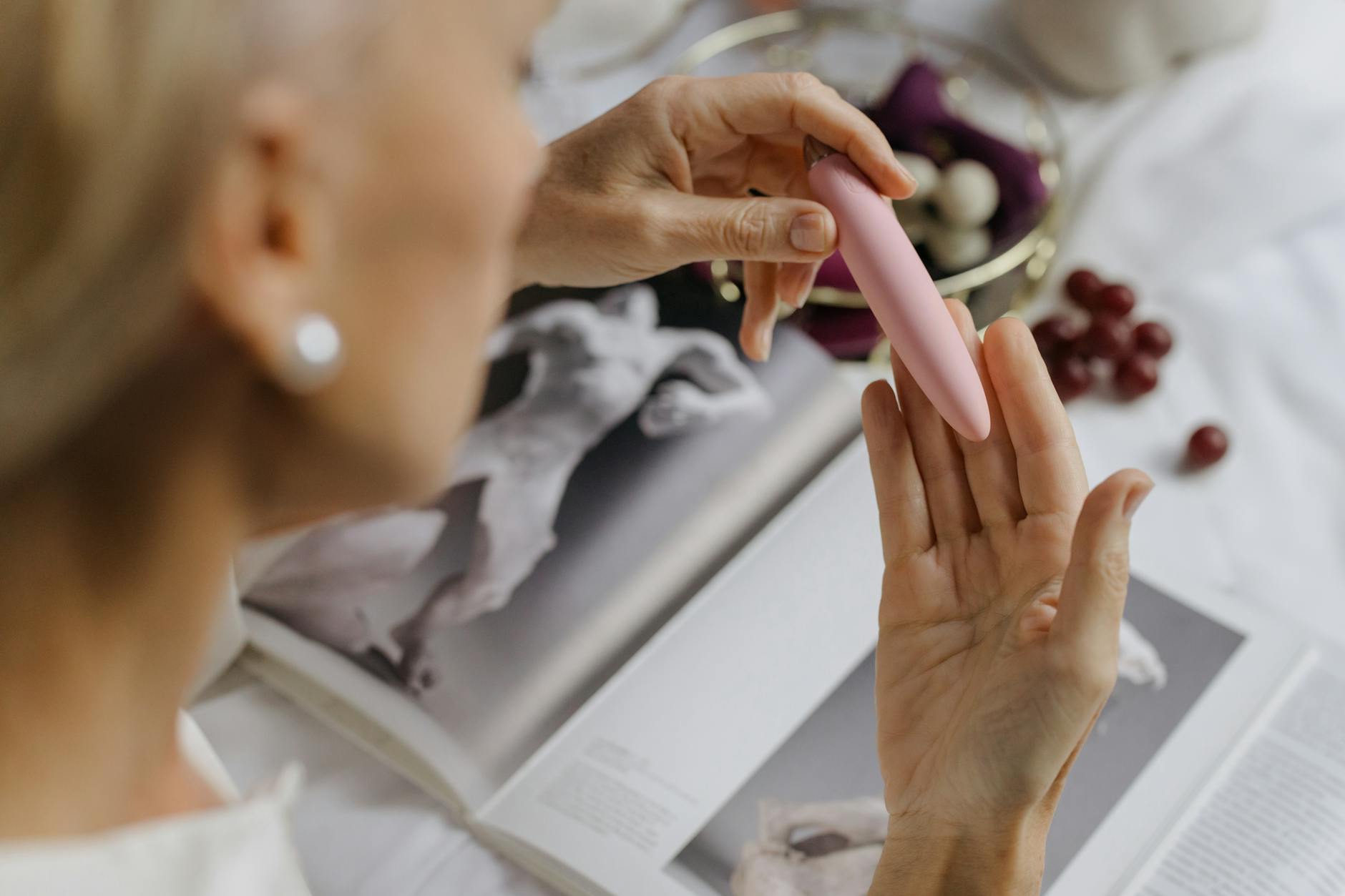
Let's talk about sensitive clitorises, because nobody else will
If your clitoris feels pain rather than pleasure during stimulation, you're not broken. You're not being a difficult partner. You're not "overthinking it." Your nervous system is wired to protect sensitive tissue, and that's actually useful information, not a problem to bulldoze through.
The real issue is that most vibrators are designed for people with average to low sensitivity. They're either too intense, too blunt, or applying pressure in a way that triggers protective pain instead of arousal. A lemon vibrator works differently because it uses suction rather than buzzing, which means you get stimulation without the same direct mechanical pressure that can hurt.
Why suction is gentler than vibration
Here's the physical difference. Traditional vibrators apply energy through rapid, linear movement. Suction works through gentle negative pressure. For a sensitive clitoris, this matters enormously.
When you use a standard vibrator on sensitive tissue, every oscillation can feel like a small shock. Over 30 seconds, it becomes uncomfortable. Over a minute, it's pain. With a lemon clitoral vibrator, the sensation is more diffuse. The pressure builds gradually, and your nervous system has less reason to throw up protective barriers.
It's like the difference between someone poking you repeatedly versus someone gently pulling you toward them. Same area, completely different sensation.
Start with the lowest setting and stay there
Seriously. Don't work your way up thinking you'll "build tolerance." You won't. Your tissue isn't something that hardens through use.
The lemon vibrator has multiple intensity levels. Pattern one (the lowest) is where you begin. Many people with low pain thresholds never need to leave this setting. Some find they eventually want pattern two. That's it. Both are plenty.
Set a timer for yourself. Use the lemon sucker on pattern one for 60 to 90 seconds, then stop. Check in with your body. Does it feel good? Neutral? Uncomfortable? Your answer determines what happens next. If it feels good, you can continue. If it's uncomfortable, stop immediately and try again tomorrow. Your clitoris learns from experience, but only positive experience.
Lubrication is non-negotiable
You might assume that since a lemon vibrator doesn't require friction, you don't need lube. Wrong. Wrong on several levels.
Lubrication does two things. First, it helps the silicone seal properly, which means the suction creates a gentle seal rather than a harsh one. Second, it signals to your nervous system that this is pleasurable, not threatening. Your body responds to that psychological signal as much as the physical sensation.
Use a water-based lubricant. Apply a small amount to the rim of the lemon sucker before each use. If you have a low pain threshold, don't scrimp here. More lube means gentler sensation. Your body isn't overreacting. It's responding correctly to information that something isn't quite right.
The angle and positioning matter more than intensity
Even with the same vibrator and same setting, how you position it changes everything.
Direct contact with your clitoral glans (the tip, the most sensitive part) can feel sharp or intense. Applying the lemon vibrator slightly off to one side, or angling it so the suction is gentler, can transform the experience. Think of it as "nearly but not quite direct." Your tissue can handle indirect stimulation better than head-on contact.
Try placing the lemon sucker at different positions around your clitoris. Upper side. Lower side. You'll probably discover that one angle feels significantly better than another. That's not weakness. That's specificity. Honor it. Every time you use the lemon vibrator, you can return to the angle that works.
Use it as a warm-up tool, not the main event
If you have a low pain threshold, a lemon clitoral vibrator works best as part of a longer experience, not the whole experience.
Spend time on non-clitoral touch first. Inner thighs, outer labia, lower belly. Get your nervous system activated and your body relaxed. When you introduce the lemon vibrator after 10 or 15 minutes of gentler play, the tissue is already slightly aroused and more forgiving. Pain thresholds are often lower when you're rushed or tense.
This also means you're not relying solely on the vibrator to create all the sensation. Your body is already invested in pleasure. The lemon sucker is enhancing something that's already there, not starting from zero. That distinction changes how your nervous system interprets the sensation.
When pain appears, stop and try again tomorrow
This is the hard rule. If you feel pain at any point, you stop. Not "push through." Not "wait a bit longer." You stop.
Pain is information. It's your body telling you this isn't working right now. That might mean the angle is wrong, the lubrication needs refreshing, or your nervous system needs rest. Honor that message. There's no prize for powering through.
Take at least 24 hours before trying again. Your tissue needs time to reset. Your nervous system needs time to forget the pain signal. When you return to the lemon vibrator, it will likely feel better.
Consider your stress levels and cycle timing
Your pain threshold isn't fixed. It changes throughout your cycle, during high-stress periods, and based on what else is happening in your body.
Right before your period, when hormones are shifting, clitoral sensitivity often increases. During high-stress weeks, your nervous system is already in protection mode, making pain thresholds lower. Some people find that their lowest pain threshold is during ovulation when tissue is more engorged and tender.
If you're tracking patterns, you might notice that the lemon vibrator feels amazing on some days and uncomfortable on others. That's not failure. That's your body being honest with you. Plan your pleasure around your cycle and stress levels. When you know you're in a high-sensitivity window, use the lowest pattern, more lube, and spend more time on warm-up.
Your partner needs to understand this too
If you're using a lemon vibrator with someone else, they need to know that your low pain threshold isn't about them. It's not rejection. It's not "you're doing it wrong."
Explain the difference between pain and intensity. Most partners assume that if a vibrator hurts, they're using it wrong. Sometimes it's positioning. Sometimes your body genuinely just has a lower threshold. Your partner's job is to trust you when you say stop, to not feel hurt by that, and to enjoy the pleasure you do experience together.
For a lemon sexual toy to work in a partnership, communication has to be the foundation. Tell them where it feels good. Show them your preferred angle and pattern. Make it collaborative rather than mysterious.
When to seek professional help
If you experience pain during sexual activity and it's been consistent across partners, toys, and situations, it's worth talking to a healthcare provider. Conditions like vulvodynia or hypertonic pelvic floor dysfunction cause pain that a lemon vibrator won't solve on its own, though it might still feel better than other options.
A pelvic floor physical therapist can teach you how to work with your body's protective responses. A gynecologist can rule out infections or tissue issues that might be causing pain. These aren't failures. They're resources. Your pleasure deserves professional support if something is genuinely wrong.
The pleasure is worth the patience
Using a lemon clitoral vibrator with a low pain threshold requires more intention than rushing through it. You're tuning into your body. You're learning what works. You're refusing to accept a sexuality that causes you pain.
That's not difficult. That's powerful. And when you find the angle, the pattern, the moment in your cycle when the lemon sucker feels genuinely incredible, you'll understand that all the careful attention wasn't a limitation. It was the thing that got you there.
Frequently asked questions
Can I use a lemon vibrator if I have vulvodynia or chronic pelvic pain?
Maybe. It depends on your specific diagnosis and pain triggers. <a href="/blog/how-to-use-lemon-vibrator-when-recovering-from-vulvodynia-or-chronic-pelvic-pain">Some people with vulvodynia find that a lemon sucker feels significantly better than traditional vibrators because the suction reduces pressure</a>. That said, if touch to your vulva is painful regardless of the tool, you'd benefit from working with a pelvic floor physical therapist before introducing any vibrator. They can help you understand whether and when vibration is safe for your body.
Will my pain threshold improve over time?
Sometimes. If your low pain threshold is caused by tension, anxiety, or learned protective patterns, gentle, consistent positive experiences with a lemon vibrator can help your nervous system relax. That's different from your tissue becoming "tougher." Your nervous system learns that stimulation is safe, so it stops triggering protective pain responses. However, if your pain threshold is caused by a medical condition or tissue issue, it won't improve just through use. Professional evaluation is worth it if pain is severe or worsening.
Is it normal to only enjoy the lowest setting of a lemon vibrator?
Completely normal. Some people discover that pattern one of the lemon vibrator is their sweet spot and never need anything more intense. That doesn't mean you're "not using the toy correctly" or missing out on something. It means you've found exactly what works for your body. Pleasure isn't a hierarchy. Your pattern one experience is just as valid as someone else's pattern three.
What if the lemon vibrator still hurts even on the lowest setting?
Then it might not be the right tool for you right now. Try introducing it without turning it on first. Let your body get familiar with the sensation of the silicone against your skin. Use more lubrication than feels necessary. Spend longer on warm-up activities. If it still causes pain, pause and try again in a few days. Your body might just need more time. If pain persists across multiple attempts, consulting a healthcare provider makes sense.
Can I use a lemon vibrator during my period?
Yes, but your pain threshold might be lower, so adjust accordingly. Some people find their clitoris is more sensitive during menstruation. You might need extra lube, a lower pattern, or more indirect positioning. Your period is a legitimate time to pleasure yourself if you want to. Just know that what felt good last week might need tweaking this week. That's your cycle doing its job.
How often should I use a lemon vibrator if I have a low pain threshold?
Listen to your body. Some people with low pain thresholds enjoy using a lemon sucker several times a week. Others prefer less frequent use. If you notice pain lingering after use or increasing over time, that's a signal to space out your sessions. If you feel good and there's no residual discomfort, more frequent use is fine. Your body will tell you what it needs if you pay attention.