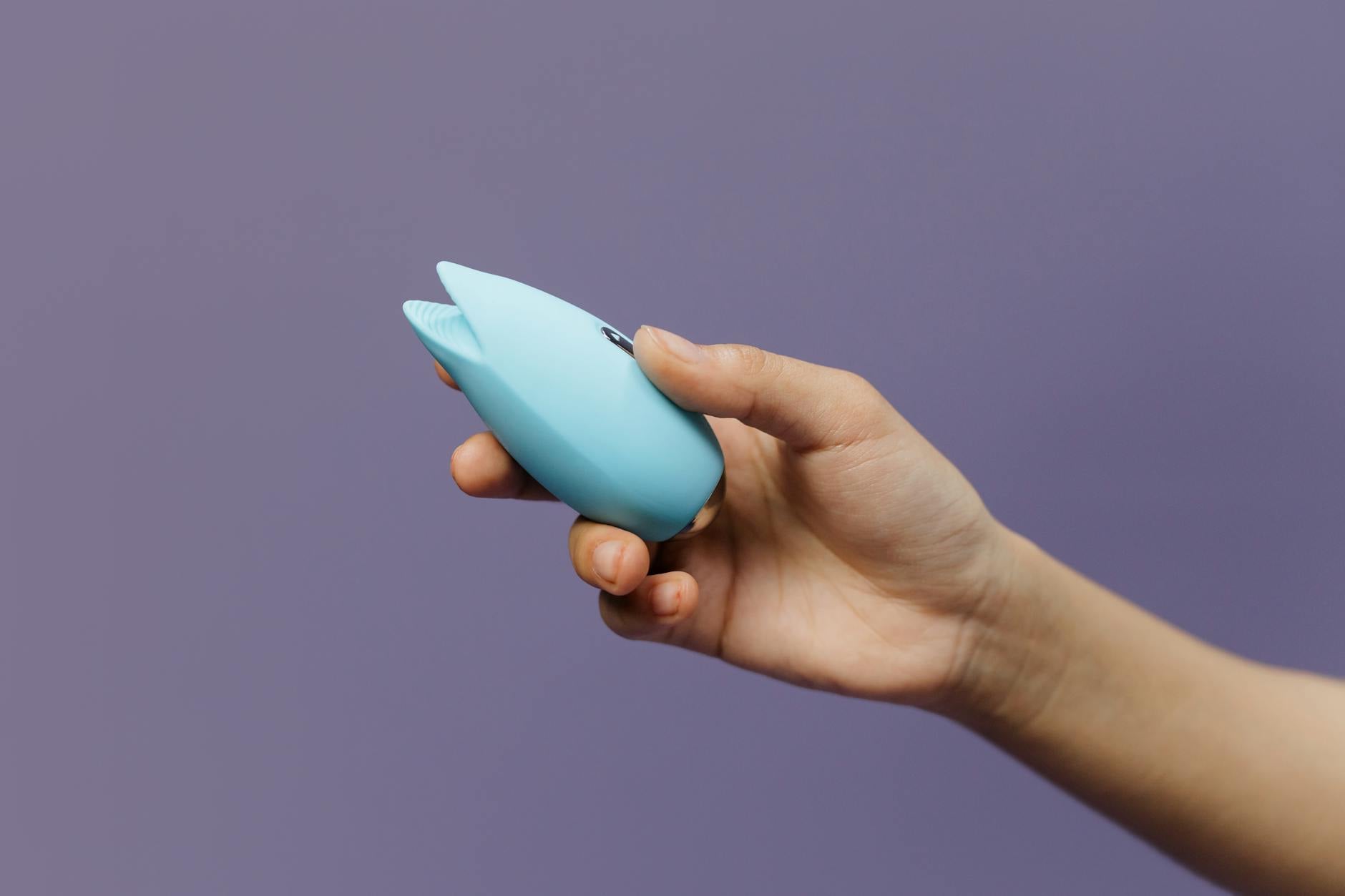
Here's the thing about heightened sensitivity
Not everyone's nervous system wants the same thing. Some bodies are wired to respond intensely to touch, and what feels amazing for your friend might feel overwhelming, even painful, for you. If you've noticed that direct clitoral stimulation makes you flinch, or that standard vibrators feel aggressively strong even on their lowest setting, you're not broken. You're sensitive. And that's actually the setup for some of the deepest, most nuanced pleasure available.
The problem is that most vibrators weren't designed with sensitivity in mind. They start at medium and go up from there. A lemon vibrator is different. The suction-based technology of the Lem works in a completely different way than traditional vibration, which means you can experience intense sensation without the jackhammer feeling that leaves some bodies raw.
Why suction changes everything for sensitive bodies
Let's separate the mechanics from the feeling. A traditional vibrator creates stimulation through rapid back-and-forth motion. It's direct, fast, and for sensitive clitorises, it can feel too sharp or even painful within seconds. Suction works on a different principle. It creates a gentle pulling sensation that stimulates a larger area of nerve endings at once, rather than targeting one tiny point with repetitive force.
This matters because sensitive bodies often have nerves that fire quickly. When you apply broad, sustained suction instead of focused vibration, the nervous system processes it differently. It feels less like being buzzed and more like being gently drawn. For people with heightened sensitivity, this is often the sweet spot between "finally something I can use" and "oh my god, that feels incredible."
Another advantage: suction-based stimulation tends to feel better as arousal builds. Many sensitive people find that once they're genuinely warmed up, the sensation that felt intense at the start becomes perfect. A lemon vibrator grows with you instead of staying at the same intensity no matter how your body changes.
Building arousal slowly is not foreplay
Here's what I tell clients with heightened sensitivity: forget the standard arc. You're not "doing foreplay wrong" if you need 30 minutes to build to the kind of arousal where direct stimulation feels good. You're being honest about your body.
Start with the Lem on its lowest pattern (pattern 1) and highest suction level, which sounds counterintuitive but actually works. Lower suction plus gentle pattern feels better than high suction on low pattern for most sensitive bodies. Let your nervous system adjust for 5 to 10 minutes before you increase anything. Your goal isn't to rush to orgasm. It's to watch your sensitivity actually shift as blood flow increases and your clitoris becomes less reactive.
Many people notice that what felt almost too much in the first minute feels just right by the 10-minute mark. That's not you adjusting. That's your body literally changing as arousal deepens. Respect that timeline. Some of the best orgasms I've heard from sensitive clients came after they stopped trying to make it happen faster and just let it build.
Angles and positioning matter more than you think
Direct contact isn't always your friend. If you're sensitive, try positioning the Lem so it contacts the hood of your clitoris rather than the tip. That indirect stimulation often feels more intense in a good way because it spreads the sensation over a slightly larger area.
Alternatively, angle it so the suction pulls from the side rather than straight on. Some sensitive bodies find a 45-degree angle feels less intense than dead-center contact. You might also experiment with contact through a thin fabric. A silk or cotton barrier doesn't reduce sensation much, but it can take the edge off for bodies that register suction as almost too sharp.
Position yourself however feels natural. You're not trying to "take it" in any particular way. If lying on your back with legs slightly apart feels best, great. If you need to be on your side or even sitting upright, that's fine too. Sensitive bodies often respond better to positions where they feel supported and can actually relax, so whatever lets you breathe and settle into the sensation is correct.
When to use lube, and why it matters for sensitivity
Lube seems like it would make suction-based toys less effective. It doesn't, and for sensitive bodies, it can actually improve the experience. A water-based lubricant creates a smoother interface between the Lem and your skin, which can reduce any dragging sensation that sometimes bothers sensitive folks. It also warms up, which many bodies find more comfortable.
You don't need much. A small amount around the opening of the Lem is enough. Some people also find that having lube on their hands before they touch themselves first helps with that initial warm-up, since cold, direct contact can feel jarring to sensitive nervous systems.
If you do use lube, be sure it's water-based. Silicone-based lubes can damage the silicone of the Lem over time, and oil-based lubes trap bacteria. Water-based is gentler on sensitive skin anyway and washes off easily.
The power of micro-movements and pattern surfing
One of the best features of a lemon clitoral vibrator for sensitive bodies is that you have options beyond "on" or "off." The Lem has multiple patterns and intensity levels. Don't just pick one and stay there.
Try "pattern surfing." Spend 3 to 4 minutes on pattern 1, then move to pattern 2 for 2 minutes, then back to pattern 1. Your nervous system adapts quickly to any single stimulus, which is why switching patterns can actually feel more intense even when the stimulation is technically the same. It's like resetting your sensitivity.
For very sensitive bodies, staying between patterns 1 and 3 is usually the sweet spot. Patterns 4 and 5 tend to feel more aggressive, though some people find that they only like the higher patterns once they're deeply aroused.
You can also use micro-movements with the device itself. Instead of holding it steady, gently rock the Lem side to side or vary the angle every 30 seconds or so. Tiny shifts in contact point mean your nervous system doesn't habituate to any one exact sensation. This keeps intensity manageable while still building toward orgasm.
Why orgasm might feel different (and that's okay)
Sensitive bodies sometimes experience quieter orgasms. Instead of the intense, full-body contraction you might read about, you might have something more subtle. A gentle release, waves of relaxation, or even a sense of deep contentment without an obvious "peak."
This is still an orgasm. This is still pleasure. The nervous system of a sensitive person often processes climax differently, and that's completely normal. Some sensitive people have multiple smaller releases instead of one big one. Others find that the pleasure is more emotional or full-body rather than purely localized.
The Lem is actually great for sensitive bodies partly because it facilitates these kinds of nuanced responses. You're not fighting against a toy designed to deliver maximum intensity. You're using something designed for control and subtlety.
When sensitivity shifts over time
Bodies change. Sometimes heightened sensitivity decreases over months or years. Sometimes it increases. If you notice that the Lem feels less intense than it used to, you might not need to buy something new. Spend a week away from it and see if sensitivity returns. Sometimes our nervous systems adapt to familiar stimuli.
You can also try using the Lem in new locations, with a partner (which changes the psychological context and can reset sensitivity), or at different times of your cycle if you menstruate. All of these variables affect how your body responds.
If sensitivity genuinely decreases over time, then patterns 4 and 5 might finally feel good. But you're not doing anything wrong by staying with lower patterns. Your pleasure is valid at any intensity level.
A note on medication and sensitivity
Some medications increase sensitivity. SSRIs, beta blockers, and certain autoimmune treatments can make nerve endings feel sharper. If you've recently started medication and noticed heightened sensitivity, that's often a dose-adjustment issue that stabilizes after a few weeks. Don't panic and don't assume your body is broken.
If sensitivity persists and is genuinely distressing, mention it to your doctor. Sometimes a different medication or timing adjustment helps. In the meantime, the Lem's controlled, low-intensity options are genuinely your friend.
The permission piece
Honestly though, the biggest shift I see with sensitive clients comes when they stop apologizing for needing things differently. You're not "too sensitive." You're not "hard to please." You have a specific nervous system that requires specific conditions for pleasure. That's not a flaw. That's information.
A lemon clitoral vibrator works so well for sensitive bodies because it gives you the tools to explore pleasure on your terms. You control the intensity. You control the pattern. You control the duration and angle and everything else. That level of agency is what allows sensitive bodies to finally relax into sensation instead of bracing against it.
Your pleasure is worth taking the time to understand.
FAQ: Sensitivity and lemon vibrators
Can I use a lemon vibrator if my clitoris feels painful sometimes?
Painful sensation is different from heightened sensitivity. If you experience pain during arousal or touch, that's something to discuss with a gynecologist or pelvic health specialist first. Genitourinary syndrome of menopause, vulvodynia, and other conditions cause pain that a vibrator won't fix (though once treated, a lemon vibrator can be great). In the meantime, lower settings and lots of warmup time help, but medical evaluation comes first.
Does sensitivity mean I have something wrong with me?
No. Heightened sensitivity is actually pretty common, especially in people with anxiety, ADHD, autistic nervous systems, or those who have experienced trauma. It's a trait, not a pathology. Your nervous system is wired to register sensation more intensely, which is why you need different tools and approaches than someone with average sensitivity. That's not wrong. It's just specific to you.
Will my sensitivity get worse if I use the Lem regularly?
No. Regular use on lower settings actually tends to help sensitive bodies build tolerance in a good way. Your nervous system becomes slightly less reactive over time, which often means you can eventually handle slightly higher patterns if you want to. There's no "use it up" mechanism with sensitivity.
What's the difference between oversensitivity and not being aroused enough?
Great question. Oversensitivity feels sharp, jarring, or almost painful. It makes you flinch or pull away. Insufficient arousal feels numb, distant, or like you need way more pressure to feel anything. They're opposite problems requiring opposite solutions. If you're not aroused, you need more warmup time and broader stimulation. If you're oversensitive, you need lower intensity and patience with your nervous system's timeline.
Can I use a lemon vibrator with a partner if I'm sensitive?
Absolutely. In fact, many sensitive people find that having a partner involved changes things in a good way. You might feel more aroused, which paradoxically makes you less sensitive. Or you might feel safer being touched, which lets you relax more. If your partner wants to use the Lem on you, make sure you've practiced with it solo first so you know what you like. Then let them know the patterns and intensities that work for you. Communication is just foreplay with the volume turned up.
Does being sensitive mean my orgasms are weaker?
Not necessarily. Sensitive nervous systems often experience orgasms as more full-bodied or nuanced rather than intense. Some sensitive people have incredibly deep, extended orgasms. Others have quieter releases. Neither is "weak." They're just different. The Lem's gentle approach often actually helps sensitive bodies access fuller, longer climaxes because you're not fighting against too much intensity.
Building a pleasure practice that fits you
Sensitivity is not a limitation. It's information about how your specific nervous system works. When you stop fighting that information and start using tools designed to work with it, pleasure becomes accessible in ways it wasn't before.
A lemon clitoral vibrator, with its suction-based design and multiple intensity levels, is genuinely one of the best options for sensitive bodies exploring solo pleasure or partnered intimacy. You're not settling for "less intense." You're choosing nuance, control, and sensation that actually works for how you're built.
Your pleasure deserves tools that match your body. A Lem does exactly that.