
Let's start with the obvious part
Your partner's vibrator is not your vibrator. This should not be a controversial statement. But somehow, in the privacy of the bedroom, many people treat it like a personal rejection when their partner reaches for something different. Here's the truth: you can love someone and still need a different toy. You can prefer suction over vibration. You can want intensity that has nothing to do with what turns them on.
The lemon vibrator works in a completely different way than most other toys your partner might own. It's a suction device, not a traditional vibrator. That distinction matters a lot when you're trying to figure out why you reach for it and why comparing it directly to what they use is setting both of you up for friction that has nothing to do with pleasure.
Why your lemon clitoral vibrator feels nothing like theirs
Most vibrators work through rapid oscillation. The motor moves side to side or up and down, delivering stimulation through direct pressure. A lemon clitoral vibrator, on the other hand, uses suction and gentle pulsing to stimulate the external clitoris and the surrounding tissue. It feels softer, broader, and less intense in the traditional "buzzy" way. Many people describe it as more like oral sex than vibration.
This isn't better or worse. It's different. And that difference is why you might reach for your lemon when your partner's vibrator leaves you feeling nothing. Your bodies might respond to different types of stimulation. Your clitoral sensitivity might be higher in certain areas. The way your tissue responds to suction versus direct vibration could be completely opposite from theirs.
Add in the fact that arousal state matters wildly. You might need suction when you're just starting out because it builds slow. They might need intense vibration to get over the finish line. Neither of you is broken or demanding. You're just different.
The comparison trap (and how to escape it)
Here's where couples usually get stuck. One partner reaches for their toy. The other assumes it means their touch isn't working. Then they reach for their own toy. Then suddenly both people are in their own pleasure, both people are slightly resentful, and nobody's talking about what actually happened.
What actually happened is this: you both just have preferences.
But the brain doesn't hear "preference." It hears "rejection." This is totally normal couple psychology. When your partner uses a different toy, your nervous system reads it as evidence that you're not enough. When you use your lemon instead of what they're offering, they might read it the same way. Both of you are wrong, and both of you are experiencing something real.
The escape hatch is talking about it before you're in the middle of it. Not during sex. Not when someone just felt dismissed. Before. When you can both think straight and neither of you is defending your pleasure.
What to say instead of saying nothing
Try this language. "I love when you touch me. I also really love this specific sensation, and my body responds to it in a way that feels hard to get otherwise." Notice what's in that sentence: you're not saying your partner's touch is bad. You're saying something specific about your body's needs.
Or: "I want to use my lemon for this part. Can you use your hands on me somewhere else?" That's collaborative. That's not comparison. That's integration.
Or, if they're reaching for their vibrator: "Before you do, I want to try something. Would you be willing to let me use mine while you touch me?" You're not replacing them. You're adding to the experience.
The words matter because they change what your brain hears. "I need my lemon more than I need you right now" reads as rejection. "My body responds really well to suction, and I want that sensation while you're here with me" reads as invitation. One shuts down intimacy. One opens it up.
The practical choreography
Here's what using a lemon clitoral vibrator looks like when you're with a partner and you actually want to stay connected. You're not taking turns. You're orchestrating.
Your partner can touch you everywhere else while you use your lemon on your clitoris. Their hands on your thighs, your breasts, your neck. Their attention still on your body, your face, your responses. You're using the lemon, but you're still being touched. You're still together.
Or they can use their vibrator on your inner thighs or labia while you use your lemon on your clitoris. Two different sensations at the same time. Two different stimulation types meeting in the middle of your body. This is not comparison. This is collaboration.
Or they can take a break while you use your lemon. You build to orgasm. They watch. Then you switch. Then they use their toy and you touch them. You're not in parallel. You're taking turns, and that's okay.
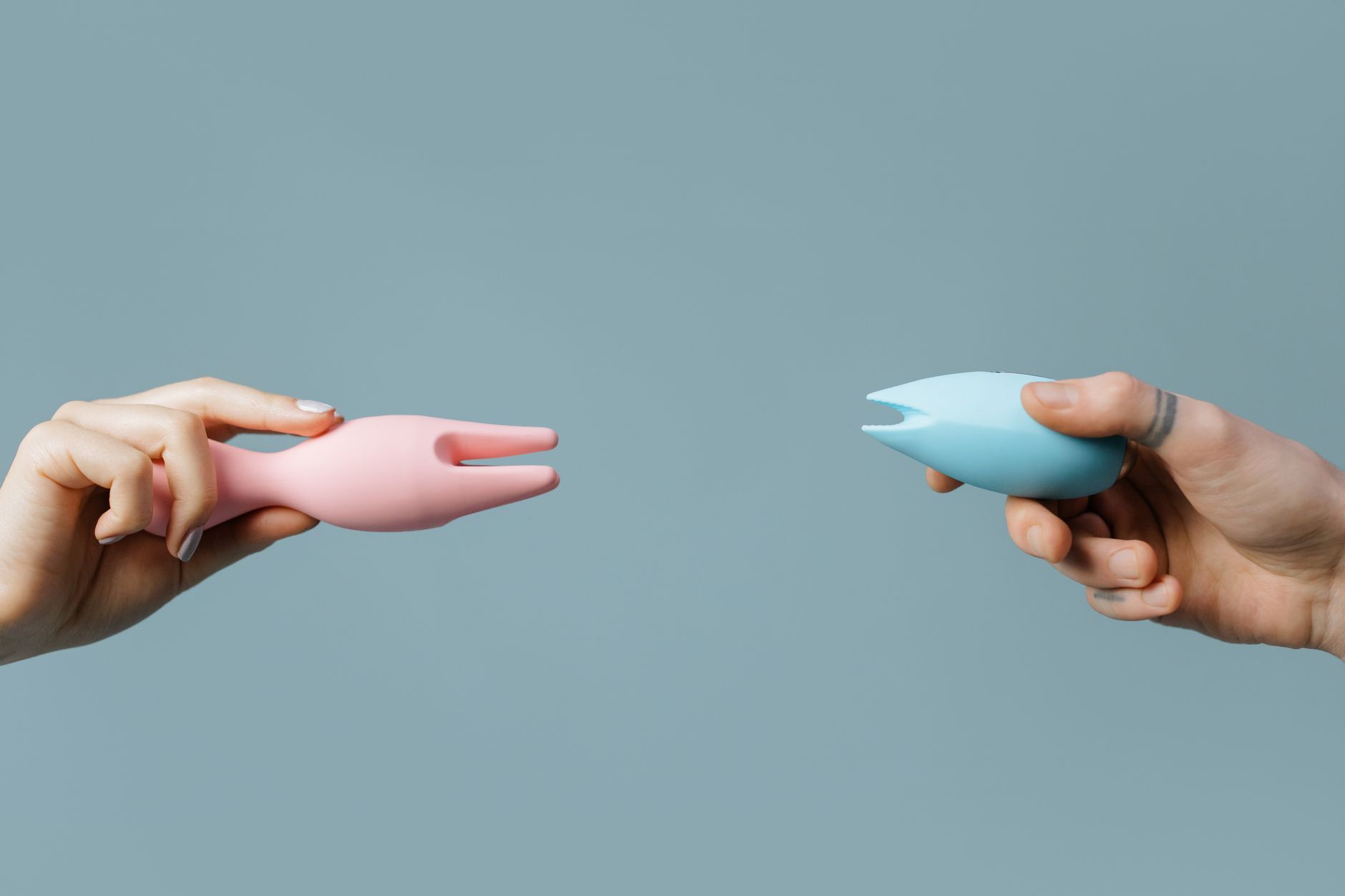
Photo by cottonbro studio on Pexels
When one of you has a stronger preference
Sometimes one partner is way more into toys. The other is more into hands or mouths. Sometimes one of you could take or leave vibration, but the other absolutely needs it to finish. This is real. And it's also fine.
The issue isn't the preference. The issue is when one person feels like they're being replaced by the toy. If your partner uses a lemon vibrator every single time and never wants your hands, yeah, that's worth talking about. But if you occasionally reach for your lemon and they occasionally reach for theirs? That's just two people knowing what their bodies need.
Some relationships find that toys become part of the regular landscape. You're not choosing between hands or toy. You're choosing between different combinations. Hands and toy. Mouth and toy. Toy and toy. Some nights it's just hands. That's the range. That's normal.
The pressure to only use toys if both partners are equally into them is a myth. One of you might think they're neutral. The other might think they're essential. You can both be right. And the lemon suction vibrator, because it feels so different from traditional vibrators, is often the toy that partners with completely different needs can actually use together without feeling like competition.
What to notice about your own resistance
If you're feeling jealous or threatened when your partner wants to use a toy, get curious about it. Is it actually about the toy? Or is it about something else. Are you feeling unseen in the relationship. Are you worried you're not enough. Are you tired and running on empty and sex feels like another thing you have to perform at.
Toys aren't the problem. But they can reveal what is. Same goes the other direction. If your partner seems hurt when you reach for your lemon, it might not be about the lemon. It might be that they feel distant from you in general. That they're worried you're not attracted to them anymore. That they need more non-sexual touch.
These are relationship conversations, not toy conversations. The lemon vibrator is just the thing that made the feeling visible.
Integration beats replacement every time
The goal isn't to stop using different toys. The goal is to use them without it feeling like you're choosing the toy over your partner. Because you're not. You're choosing your pleasure, and you're choosing them by staying present, staying communicative, and staying together while you get there.
Your lemon clitoral vibrator is not a threat to your partner. It's a tool that helps your body feel good. And your partner's toy is not a threat to you. It's the same thing from the other side. You both get to have what works. You both get to communicate about it. You both get to stay connected while you're getting off.
Stop apologizing for needing suction instead of vibration. Stop defending your preference as if it's a referendum on their touch. And ask your partner to do the same. You're not being compared. You're being supplemented. There's a world of difference.
People also ask
Is it normal to prefer a toy over your partner's hands?
Completely normal. Toys deliver consistent stimulation at a specific intensity and pattern that hands, by nature, can't always match. Your body might respond better to the steady suction of a lemon vibrator than to the variable pressure of fingers. That's not about your partner's skill or your attraction to them. It's about how your nervous system is wired. Many couples find that once they stop treating toy preference as rejection, sex gets way better because everyone's actually getting what they need instead of performing what they think they should want.
Should we use toys together or take turns?
Both work. Together feels more connected for some couples. Taking turns feels less pressured for others. Try integration first. Your partner touches you while you use your lemon. You use your lemon while they use their vibrator. You're in the same space, same bed, same experience. If that feels weird, then take turns and enjoy watching each other. There's no hierarchy of intimacy. Connection is connection.
What if my partner feels threatened by my lemon vibrator?
Talk about it when you're both clothed and calm. Not right after sex. Say something like: "I love this toy because it feels good on my body. I also love you and your touch. They're different things, and I want both." If they're still struggling, ask what they're actually worried about. Are they feeling not enough? Are they insecure about their own performance? Are they worried you're checking out of the relationship? Once you know the real fear, you can address it. Usually it's not about the toy at all.
Can my partner use my lemon on me?
Yes, though it works differently in someone else's hands. You control the angle and speed when you use it on yourself. Your partner might apply it differently, and that changes the sensation. Some people love that variation. Some people prefer to keep control. Talk about what you want to try. If your partner wants to learn how your lemon feels on you, guide their hand. Show them the patterns you like. Make it collaborative.
Why do I only want to use my lemon and not their toys?
Your body has preferences, and that's information, not rejection. Maybe the lemon suction feels better than vibration. Maybe you have sensitivity differences. Maybe you need the slow buildup that suction gives you. Maybe your partner's toy is too intense right before your clitoris gets fully aroused. That's not good or bad. It's just your body telling you what it needs. Use what works. But also stay curious. Your preferences might shift over time, with different arousal states, with different partners, or just because your body changes.
Is using toys a sign we have a bad sex life?
Nope. It's actually the opposite. Couples who use toys together tend to communicate better about pleasure because they have to. "What should we try tonight." "Do you want me to use this." "That felt amazing, let's do more of that." Toys force conversations that many couples never have. And those conversations make everything better, with or without the toy. Nancy's Lemon's lemon vibrators exist because people's bodies are complicated and deserve support. Using one just means you're paying attention.
Final thought
Your lemon clitoral vibrator is not in competition with your partner. It's part of your pleasure landscape. And so is their toy, their hands, their mouth, their attention. You can want all of it. You can want it at different times. You can want it together. Your pleasure matters enough to ask for what you need. And your partner's matters enough to listen when they ask for theirs. That's the whole game.
Ready to have this conversation with your partner. Start small. Share what you love about your lemon vibrator. Ask what they love about theirs. Then ask what it would feel like to use them together. You might be surprised how much better everything feels when you stop treating preference like rejection.