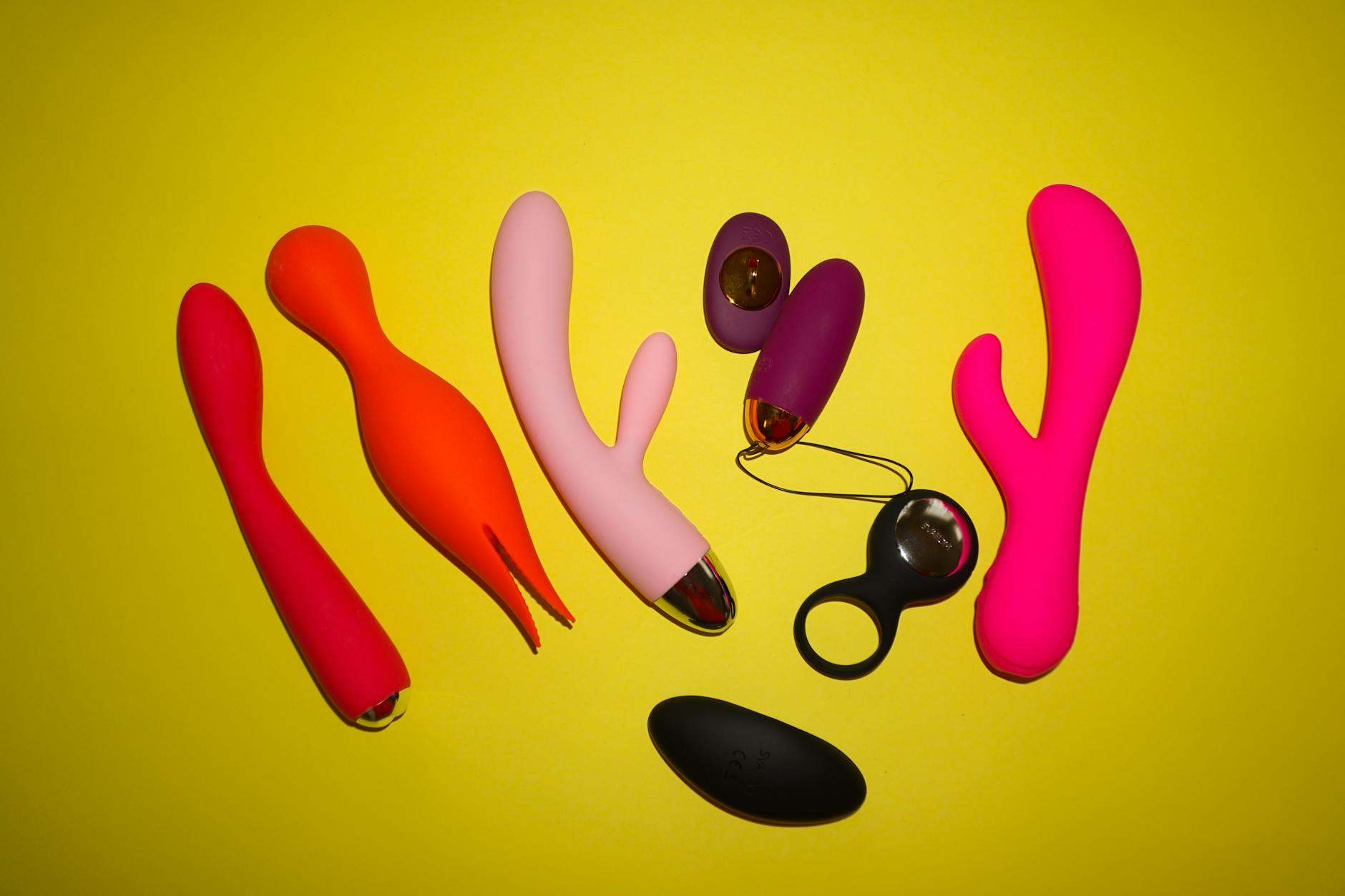
Here's what nobody told you about arousal after 40
Your arousal didn't break. It changed. And the change is actually a feature, not a bug.
Somewhere in your 30s or early 40s, you probably noticed that arousal takes longer to build. That five-minute warm-up that used to work? Gone. Now you need 15, 20, sometimes 30 minutes before your body feels ready. It's easy to assume something's wrong. It's not. What's happening is physiological, predictable, and almost universally fixable once you stop fighting it.
Most of my clients in midlife think slower arousal means lower desire. That's the trap. A slower build doesn't mean you want it less. It means your nervous system needs a bit more time to shift from "paying the bills" mode into "present in pleasure" mode. That's not weakness. That's your body getting honest about what it actually needs.
Why arousal actually slows down
Three shifts happen around 40 and beyond.
First, testosterone drops (yes, people with vulvas make testosterone, and yes, it matters for arousal). Testosterone is what kicks your nervous system into higher gear quickly. Less of it means the spark takes longer to ignite. Second, blood flow to the genitals changes. Arousal is fundamentally a circulatory event. When blood flow is less responsive, the physical cascade of lubrication, swelling, and sensitivity takes longer to activate. Third, you're probably busier and more cognitively loaded than you were at 25. Your brain is running seventeen background processes at once. Shifting out of that state into arousal requires actual transition time, not just a few kisses.
None of this is tragic. It's just information.
The reframe that changes everything
Here's the thing: a slower build doesn't have to feel like deprivation. It can feel like permission.
When arousal took five minutes, the experience was rushed. Your partner (or you, alone) was racing toward the finish. Now that it takes 20 minutes, you get 20 minutes of sustained sensation. You get to exist in that rising phase where the pleasure is deepening and intensifying without pressure to get anywhere. That's actually richer.
I've watched clients shift from "Why is this taking so long?" to "Okay, I have 25 minutes to focus on nothing but sensation." That mindset swap alone changes the experience from frustration into something closer to meditation.
How a lemon vibrator actually helps
A lemon clitoral vibrator like the Lem is specifically useful for this slower arousal timeline because it collapses the gap between "not quite there yet" and "fully aroused."
Here's the mechanics: the Lem uses air-suction stimulation, which works differently than traditional vibration. Traditional vibrators ask your body to respond to friction and speed. The Lem's suction pattern works with your nervous system instead of demanding it work faster. You're not trying to cross a finish line with it. You're building sensation gradually, exactly the way your body wants to build it.
Starting earlier helps too. Instead of waiting until you're already aroused to bring a lemon vibrator in, introduce it 10 to 15 minutes into your warm-up routine. Let it do the work of bridging that slower-arousal gap. Use lower settings first. (Pattern 1 or 2 on the Lem is genuinely sufficient for the opening phase of arousal.) You're not trying to go hard and fast. You're creating consistent, gentle stimulation that your nervous system can follow into deeper arousal.
Building your 20-minute rhythm
Let's be practical about how to structure this.
Minutes 0-5: Mental transition. Put your phone away. Tell your partner you're unavailable. Light a candle. Do whatever signal tells your brain "pleasure time now." This isn't wasted time. It's essential.
Minutes 5-10: Manual touch. This is kissing, touching, light massage, whatever foreplay you actually enjoy. No penetration. No agenda beyond sensation.
Minutes 10-20: Introduce the Lem at a low pattern. Let it create consistent stimulation while you continue whatever foreplay feels good. This is where the build happens. You're not trying to reach orgasm yet. You're letting arousal deepen.
Minutes 20-plus: From here, you can increase intensity, add penetration if you want it, involve a partner more actively, or just keep going with what's working. You're now properly aroused, and your body will respond faster to changes in stimulation.
Does this mean every session takes 25 minutes? No. Some days you'll be aroused faster. Some days you'll take longer. The point is having a framework that doesn't shame the slower pace, but works with it.
The partner conversation that matters
If you have a partner, they need to understand this isn't about them.
Many partners interpret slower arousal as "my partner isn't attracted to me" or "my partner isn't interested." That's backwards. Slower arousal often means your partner is more present, more in their body, less willing to fake it. That's a feature.
The useful conversation isn't about why it's taking longer. It's about what helps. "I like it when we have 20 minutes to warm up" is different from "I'm not as attracted to you as I used to be." One is actionable. One creates spiral.
If your partner pushes back on timing, that's a separate conversation about compatibility and effort. Your arousal timeline isn't negotiable. Their willingness to meet you there is.
When to worry and when not to
Slower arousal after 40 is normal. Complete absence of arousal is not.
If your arousal is slow but still building, you're fine. If arousal has flatlined entirely, that's worth mentioning to a doctor. It could be medication, it could be relationship stuff, it could be hormonal. But "slow" is not the same as "gone."
Also, if you're noticing dryness that doesn't improve with warm-up time and lubricant, that's genitourinary syndrome of menopause. It's real, it's fixable with topical treatments, and a menopause-trained GP can help in weeks.
The solo version
If you're exploring this alone, a lemon vibrator is honestly the fastest way to understand your new arousal timeline.
You don't have performance pressure. You don't have to worry about your partner's comfort. You can spend 25 minutes just getting to know how your body wants to be touched now. That information is gold. Once you know how you like to be aroused post-40, you can teach a partner or decide to keep this knowledge for yourself.
One other thing: the experience of taking your time solo is often the thing that cracks the reframe open. Thirty minutes alone with sensation, without goal, without rush? That's not deprivation. That's indulgence.
FAQ: Slower arousal after 40
Is slower arousal after 40 a sign of lower desire?
No. Arousal speed and desire are different things. You can have wildly strong desire and slow arousal. Desire is the "I want this" feeling. Arousal is the physical cascade that makes it possible. One doesn't predict the other.
Can hormonal changes cause arousal to slow down?
Yes. Dropping testosterone and shifting estrogen both affect arousal speed. If you're on hormonal birth control, that can slow arousal too. If you're perimenopausal, arousal changes are extremely common. See a menopause-aware doctor if the shift feels sudden or distressing.
Does arousal speed ever go back to how it was before 40?
Not usually to the exact same speed. But many people find that once they stop fighting the slower pace and actually work with it, the experience feels better than it did when it was faster. You're trading speed for depth.
How does the Lem specifically help with slow arousal?
The Lem's air-suction technology doesn't require the same kind of intense blood-flow response that traditional vibrators do. It works with your nervous system gradually, which pairs well with a slower arousal timeline. Starting on lower patterns means you can use it to bridge the gap between "not yet aroused" and "building arousal" without pressure to go hard and fast.
Should I use lubricant with a lemon vibrator if arousal is slow?
Yes, even if your natural lubrication is building. Extra lubrication (water-based only) helps the Lem's seal work better and reduces any friction that might feel uncomfortable during a longer warm-up. It's not a sign you're broken. It's a tool.
Is it normal to feel frustrated about needing more time for arousal?
Completely. You're grieving the faster arousal you used to have. That's a real loss. And it's also true that the slower arousal, once you work with it instead of against it, often feels richer and more satisfying. Both things are true.
The slow build is not the problem
You don't need to speed yourself up. You need tools and permission to slow down.
A lemon vibrator, a little extra time, and the information that this is normal and workable? That's usually enough. Your body after 40 isn't broken. It's just asking for a different kind of attention. Give it that, and you'll probably find that your pleasure has actually deepened, not diminished.
If you're struggling with arousal changes and want support navigating them, reach out. That's what we're here for.
References and further reading
- Leiblum, S.R., et al. (2006). "Brief Report: A Study of Sexual Arousal Dysfunction in Midlife Women." Journal of Sex & Marital Therapy, 32(5), 435-441.
- Kingsberg, S. A. (2002). "The Impact of Aging on Sexual Function in Women and Their Partners." Archives of Sexual Behavior, 31(5), 431-437.
- American College of Obstetricians and Gynecologists (ACOG). (2021). "Sexual Health and Aging." Recommendations for clinical practice.
- Masters, W.H., & Johnson, V.E. (1966). Human Sexual Response. Little, Brown and Company. [Foundational research on arousal physiology, including age-related changes.]