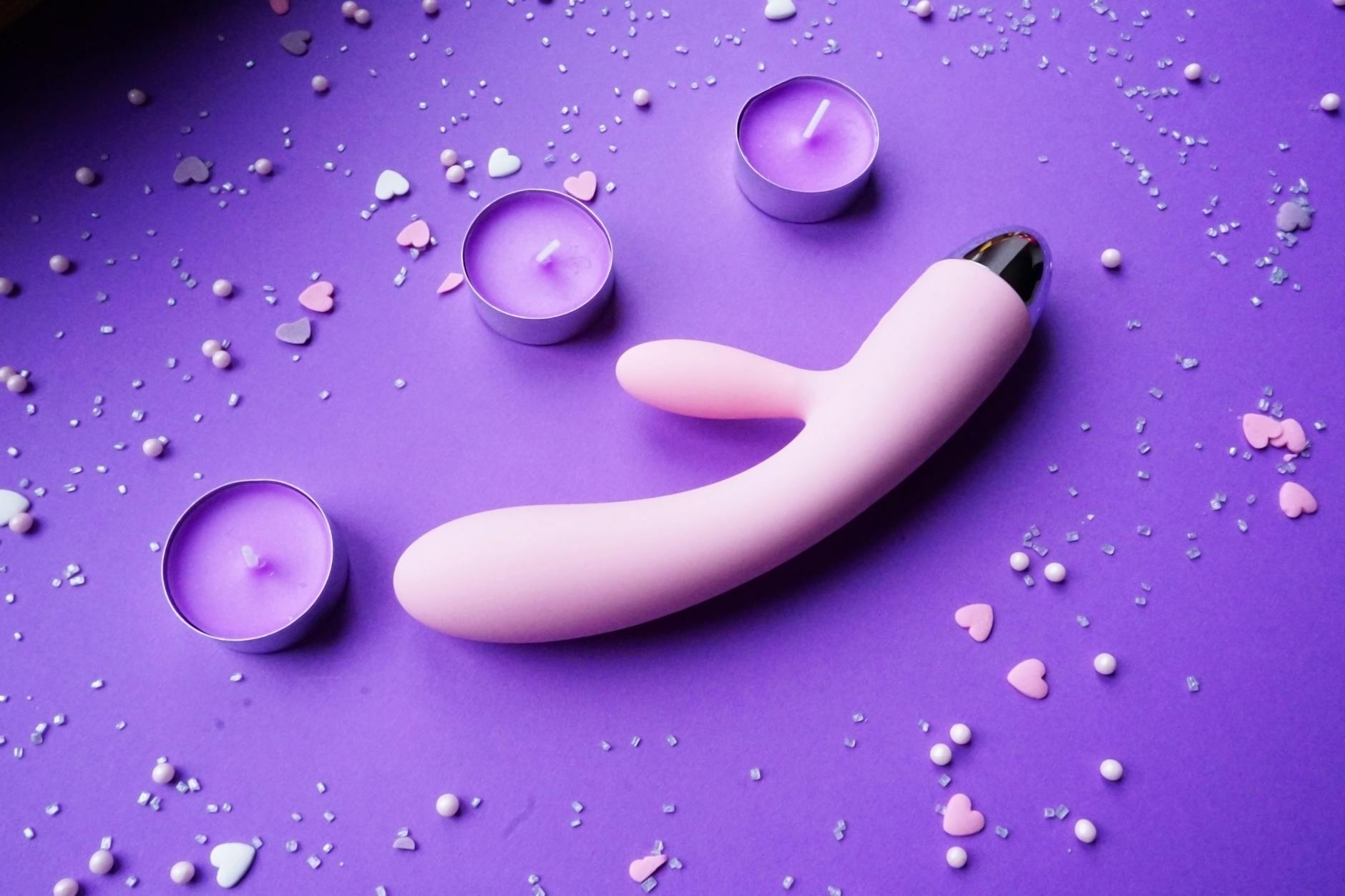
Let's be real about what anxiety does
You want to enjoy yourself. Your body wants to enjoy itself. And then your brain shows up with a running commentary about whether you're doing it right, whether your partner is judging you, whether you're taking too long, or whether you deserve this at all. Welcome to anxiety during pleasure.
Here's the neurology: anxiety activates your sympathetic nervous system (fight-or-flight), which literally redirects blood flow away from your genitals and toward your muscles. Arousal requires the opposite state. Your vagus nerve needs to engage your parasympathetic system (rest-and-digest) for anything to happen. Most people don't realize they're fighting their own physiology.
That's where a lemon vibrator changes things. The device doesn't fix anxiety, but it does something better: it gives your nervous system a reason to override the panic.
Why vibration cuts through anxiety better than touch alone
Here's the part most people miss. When you're anxious, your threshold for sensation goes up. A partner's gentle touch? Your brain might interpret that as pressure or threat. You tense harder. It spirals.
Vibration is different. It's rhythmic input that your nervous system recognizes as distinct from ambient threat. A lemon vibrator or lemon clitoral vibrator operates at a frequency (typically 50-100 Hz) that's borderline impossible to ignore. Your brain stops narrating and starts feeling.
There's also a safety element. A device is predictable. You control it. No performance pressure toward another person. No read-between-the-lines fear that your pleasure is an obligation to reciprocate. That control alone can shift your nervous system toward safety.
The exact setup that reduces anxiety before you even start
Environment matters because anxiety is contagious between you and your surroundings. Before you touch the lemon sucker or any vibrator:
1. Temperature and comfort first. Chilled skin triggers tension. Warm yourself up. A shower, a blanket, even just time in a warm room signals safety to your vagus nerve. This isn't frilly. It's neuroscience.
2. Remove the audience. This includes your own inner voice. Phone off. Partner out of the room if you're solo. If you're with someone, establish that they're not watching for performance. They're present, not present for. Huge difference.
3. Set a time boundary. Anxiety explodes in open-ended situations ("I have all night to figure this out"). Instead: "I'm spending 20 minutes exploring what feels good." Boundary removes the performance pressure entirely.
4. Start with breath, not touch. Two minutes of 4-7-8 breathing (inhale for 4, hold for 7, exhale for 8) before you touch the lemon vibrator. This shifts your nervous system directly. Your body can't stay in fight-or-flight while your breathing is calm.
How to actually use a lemon vibrator when your brain won't shut up
Start on the lowest setting. Seriously. Anxious nervous systems often need gentle entry, not intensity.
Place the lemon clitoral vibrator against your outer labia first, not directly on your clitoris. The goal isn't stimulation yet. It's acclimation. You're teaching your nervous system that this sensation is safe. Spend 3-5 minutes here, breathing, noticing where your mind goes.
Then move inward slightly. Still low intensity. You might feel a small internal shift, a relaxation in your lower belly. That's your parasympathetic nervous system engaging. Stay here.
If your mind starts narrating ("Is this working?" "Am I doing this right?"), that's the anxiety sneaking back. Return to breath. One full 4-7-8 cycle. Then back to sensation.
The lemon vibrator works partly because sensation anchors you to the present moment. Your anxious brain is always three steps ahead. Rhythmic vibration pulls you into now.
What to do if anxiety spiking happens mid-session
You'll feel it. A sudden clench in your chest, a rush of intrusive thoughts, or just a sense of being watched even though you're alone. Don't push through it. That's counterproductive.
Stop the vibrator. Put it down. Three minutes of slower breathing. This isn't failure. You're teaching your nervous system that you listen to it, that you won't override its signals.
Then, if you want to continue: start again at an even lower setting. The second time, your nervous system often settles faster because it knows you won't ignore it.
Many of my clients find that after 3-4 sessions like this, the panic quiets significantly. Your body is learning that pleasure isn't dangerous.
The partner dimension: using a lemon vibrator together when anxiety is in the room
If you're with a partner and anxiety shows up, the most common mistake is pretending it isn't there. "Just relax" doesn't work. Distraction doesn't work. Honesty does.
Tell them: "I want to feel closer to you, and my nervous system is being cautious. Can we slow down and try something specific?" Then introduce the lemon sucker together. The device becomes a bridge, not a rejection of them.
Your partner can hold it, but you control the intensity and rhythm. You're in charge of your own nervous system. After a few sessions, the anxiety often softens because the experience has been positive, predictable, and mutual.
Some couples find that using a lemon vibrator together actually deepens intimacy faster than traditional partnered sex would have, because there's less performance pressure baked in.
When anxiety + pleasure is a bigger picture issue
If anxiety is pervasive across your life, not just during sex, a vibrator is a useful tool but not the only thing. Talk therapy, particularly somatic or trauma-informed approaches, can address why your nervous system is defaulting to threat.
If you have a history of sexual trauma, anxiety during pleasure is often your body doing exactly what it learned to do. That's not a character flaw. It's adaptation. A vibrator can still help, but with a trauma-informed therapist in your corner.
And if you're on medication for anxiety, that's not a disqualifier for pleasure. Some medications can impact arousal, but there are workarounds. A lemon clitoral vibrator's intensity often compensates where touch alone wouldn't.
The cumulative effect
Here's what I've seen with my clients who stick with this approach: after about a month of regular use, something shifts. The anxiety doesn't disappear (anxiety rarely vanishes completely), but it stops being the default. You remember that your body knows how to feel good. The lemon vibrator becomes less of a hack and more of a preference because it just works for you.
Your nervous system isn't broken. It's protecting you in the only way it knows. The job is to teach it that pleasure is safe. A vibrator, combined with the right environment and pacing, does that.