Let's start with what's actually happening
Perimenopause is messier than menopause. Instead of one hormonal cliff, you get a wobbling staircase. Estrogen and progesterone spike and crash unpredictably across weeks or months, which means your arousal, sensation, and orgasm response shift just as unpredictably. One week your body feels exactly like it always did. Three days later, it doesn't.
This is why people in perimenopause often say their pleasure feels broken. It's not broken. It's just responding to a moving target.
Here's what changes, and how to work with it instead of fighting it.
How hormonal fluctuation actually affects arousal
Estrogen controls blood flow to genital tissue and affects how quickly arousal builds. When estrogen is high (early cycle), warmup is faster and sensation is sharper. When it crashes (late cycle), you might need twice as long to feel ready, and the sensations themselves might feel duller or more surface-level.
Progesterone also matters. It's calming in small amounts, sedating in large ones. High progesterone weeks often feel like trying to get excited while someone's gently pressing pause. Your brain isn't less interested. Your nervous system is literally being told to downshift.
Then there's testosterone, which dips slightly during perimenopause. This affects clitoral sensitivity and the intensity of orgasm. For some people, the drop is barely noticeable. For others, it's the difference between lightning and candlelight.
The third factor: unpredictability. In your 20s and 30s, these hormonal patterns repeat in a 28-day cycle you could almost set a clock by. In perimenopause, that rhythm vanishes. Estrogen might surge for two weeks straight, then crash for four. You can't predict it. You can only notice it when it happens.
Building flexibility into your lemon vibrator routine
Here's the practical shift. Instead of one approach, you need three.
High-energy weeks (early perimenopause cycle, when estrogen is climbing). Your body warms up fast. You might reach arousal in 5-10 minutes instead of 15. The lem's lower intensity settings (patterns 1-2) might feel too gentle. Start at pattern 2-3, and give yourself permission to jump patterns faster than you're used to. Sensation is sharper. You're not being greedy. You're matching your body's actual readiness.
Medium weeks (hormone level neutral or mixed). This is your baseline. Standard warm-up time of 15-20 minutes. Start at pattern 2, build gradually. If you notice sensation feeling a touch muted, water-based lubricant helps sharpen it. You're not doing anything wrong. You're compensating for a hormone shift that's completely normal.
Low-energy weeks (progesterone surge or estrogen crash, often late cycle). Your nervous system is literally dampened. Warmup takes 20-30 minutes, not 10. Sensation is duller. Your first instinct will be to use higher intensities to try to feel it. Resist that. Instead, start lower and extend your session. Use patterns 1-2 for 5-8 minutes before moving up. Add lubrication even if you normally skip it. Let your body know there's no rush. This is when a partner can help most. If you're with someone, have them focus on other kinds of touch (hands, mouth, massage) for the first 10-15 minutes before introducing the lem.
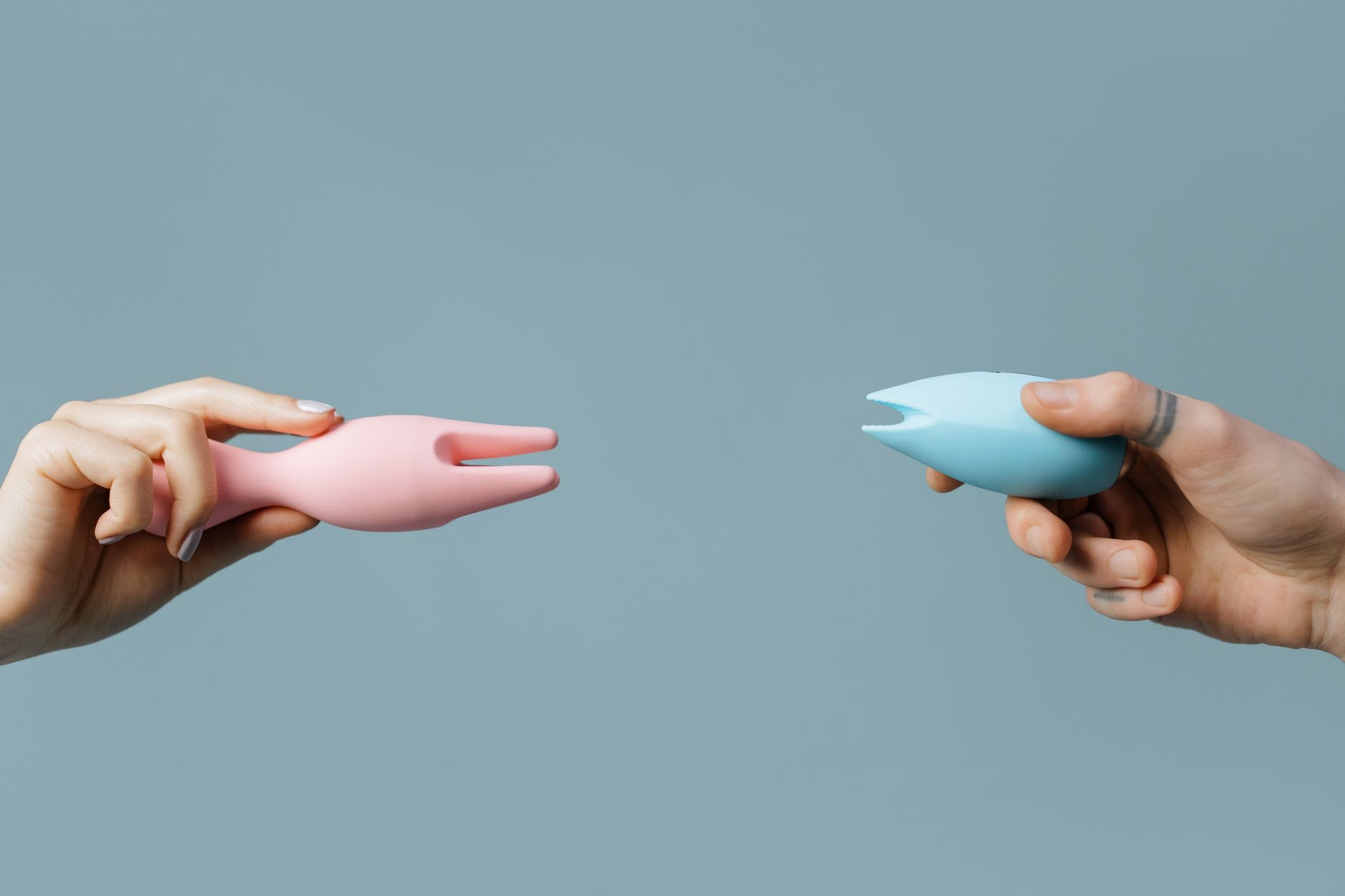
Photo by cottonbro studio on Pexels
Tracking what actually matters
Don't track your cycle if you don't want to. But if you're struggling to understand why pleasure feels inconsistent, three weeks of notes helps. Not a diary. Just your phone. Date, arousal warmup time (5 min? 15 min? 30 min?), sensation sharpness (1-10), orgasm intensity (1-10), anything else you notice.
After three weeks, patterns emerge. You'll see if there's a rhythm to the wobble, or if it's truly random. Most people in perimenopause find a loose pattern: one or two high weeks, one or two low weeks, rest unpredictable. Once you see your own pattern, you stop blaming yourself. You start planning around it.
What to do when sensation feels numb
If a whole week or more feels like you're stimulating someone else's body, that's worth mentioning to your doctor. It might just be the hormone dip. It also might be a thyroid shift, an antidepressant interaction, or blood sugar issues. Perimenopause clusters with other health changes. Getting checked isn't weakness. It's intelligence.
While you're waiting for that appointment, focus on mental foreplay more than physical. Ease off the lem. Spend 15-20 minutes with a partner (or fantasy, or erotic audio) building arousal in your mind first. Let the physical pleasure follow the mental state. Many people report that this actually creates more intense orgasms overall, even when sensation is dampened.
For solo sessions when numbness hits, try a slightly different approach with your lemon vibrator. Angle it toward the outer labia and mons pubis instead of direct clitoral contact. The sensation spreads wider and sometimes feels more present. Vary position. Side-lying sometimes feels sharper than on your back. Your body's sensitivity map is shifting. Curiosity beats frustration.
The mood and energy factor people forget
Hormones affect mood and mental energy, which affects arousal more than most people realize. High-estrogen weeks often feel like you have permission to want sex. Low-estrogen weeks feel like you have to convince yourself. This isn't about desire disappearing. It's about the neurochemistry that packages desire in motivation.
If you're blaming yourself for "not being in the mood" during week three of your cycle, stop. Your brain is literally being told to conserve energy. That's not laziness. That's biology. On those weeks, the best thing you can do is lower friction. Make it easy. Spend five minutes and see what happens. Let your body surprise you. Sometimes the orgasm is there. Sometimes it's not. Both are fine.
When to reach out for more support
If mood shifts are severe (irritability, depression, anxiety spiraling in specific weeks), or if pleasure loss is starting to affect your relationship, talking to a therapist who specializes in perimenopause helps. This phase lasts 4-10 years for most people. Learning to navigate it with curiosity instead of frustration makes a real difference.
Many doctors can also discuss low-dose estrogen patches or other hormonal support if the swings feel extreme. It's not mandatory. But it's an option, and knowing you have it sometimes reduces the stress of the unpredictability itself.
FAQ
How long does perimenopause usually last?
Perimen opause typically lasts between four and ten years, though the average is around five to eight years. Every person's timeline is different. Some experience a sharp drop into menopause over six months. Others have a long, slow wobble. Tracking your own experience matters more than comparing to anyone else's timeline.
Can I use my lemon vibrator the same way during perimenopause as I did before?
You can, but you might feel frustrated if your body isn't responding the way it did. Flexibility helps more than stubbornness. Some weeks, your old routine works perfectly. Other weeks, you'll need to slow down, add lube, or spend more time warming up. Building three approaches (high-energy, medium, and low-energy versions) lets you adapt week to week without feeling like you're doing anything wrong.
Will my orgasms feel different during perimenopause?
Many people report orgasms feel shallower or less intense during perimenopause, especially in low-hormone weeks. Some also report that orgasms feel different but not worse. A few describe them as more diffuse or longer-lasting instead of sharp. The variability is partly hormonal and partly about expectations. If you expect an orgasm to feel exactly like it did at 25, disappointment is built in. If you expect it to shift and explore what that shift feels like, you might find intensity in unexpected places.
Should I use more intense settings on my lem during perimenopause?
Not automatically. If sensation feels dull, the instinct is to turn up the intensity. But sometimes that just tires out your nervous system without creating pleasure. Try the opposite: slower patterns, longer sessions, more lube. Let your body wake up on its own timeline. You can always increase intensity later. The lem's air-suction technology often works better at lower settings during hormonal shifts because it's creating sustained sensation rather than aggressive vibration.
What if my arousal pattern is completely irregular, not cyclical?
If you can't find any pattern after three weeks of notes, don't panic. Some people's perimenopause is genuinely random. In that case, the skill to develop is recognizing arousal in the moment instead of expecting it on schedule. Some weeks you might feel ready with five minutes of touch. Other weeks it takes 30. Neither is normal or abnormal. Both are you, responding to hormones you can't control. Stress, sleep, relationship dynamics, and physical health also shift during perimenopause. All of those affect arousal more than you'd think.
Is it normal to lose interest in sex during perimenopause?
Dips in desire are common during perimenopause, especially in low-hormone weeks or when mood is low. But total loss of interest that lasts months is worth discussing with a doctor. It could be hormonal. It could also be thyroid-related, depression, medication interaction, or relationship dynamics. Getting clarity helps. And if you want to rebuild interest, sometimes that starts with permission to explore pleasure solo, with no goal other than curiosity. A lemon clitoral vibrator is a safe way to reconnect with your body without performance pressure.
Can hormone replacement therapy (HRT) make pleasure easier during perimenopause?
For some people, yes. Stabilizing hormones can smooth out the arousal and sensation swings. But HRT isn't for everyone, and it takes a few months to feel effects. If you're curious, conversation with a doctor who specializes in menopause is worth it. Even if HRT isn't right for you, knowing you have the option sometimes reduces anxiety about the unpredictability.
The real shift
Perimenopause invites you to stop expecting your pleasure to be stable and consistent. That sounds like bad news. It's actually liberating. You get to renegotiate with your body every few weeks. You get to learn what works at 45 that didn't work at 35. You get to stop performing and start experimenting.
Your lemon vibrator is the same tool. Your body is the variable. And that variable is teaching you something if you're willing to listen.
Ready to explore this phase with more clarity? Reach out to our contact page if you have specific questions about what might work for your body right now.