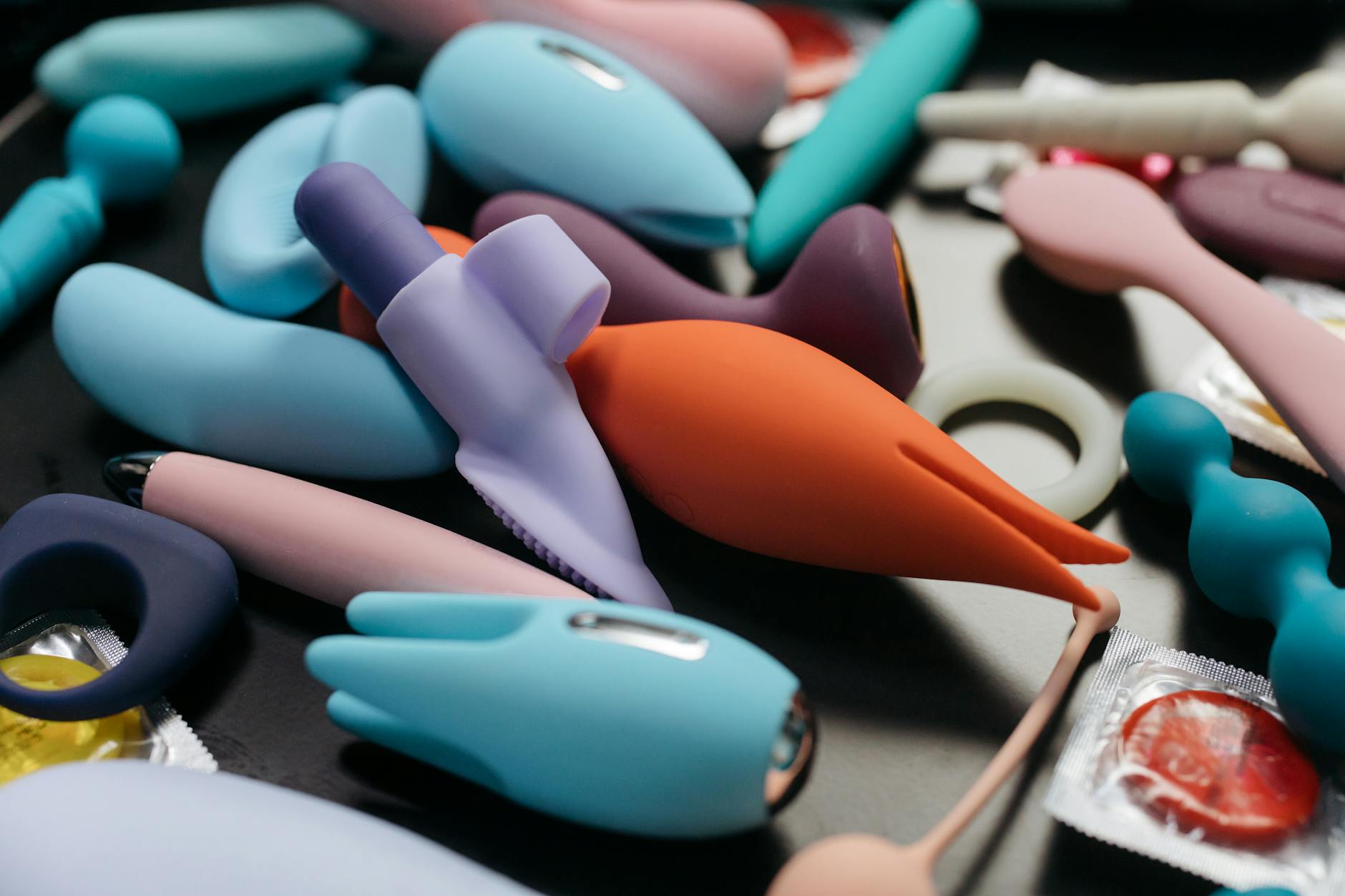
How to Use a Lemon Vibrator When You Feel Disconnected From Pleasure After Relationship Trauma
Let's be real. After relationship trauma, your body doesn't just feel sad. It feels unsafe. And that's not something you can logic your way out of, no matter how much time has passed or how much therapy you've done.
Pleasure, which should feel like the most natural thing in the world, suddenly feels like trespassing. Your nervous system learned that intimacy could hurt you. Now it's protecting you by shutting down sensation, arousal, desire, sometimes all of it at once. That's not weakness or brokenness. That's your body doing exactly what it's supposed to do: keeping you alive.
But here's what I see in my practice over and over again: reclaiming pleasure after trauma is possible. It's not about forcing yourself to feel something you don't. It's about building safety back into your body, slowly, on your terms. And for some people, a tool like the Lem vibrator becomes part of that process. Not because it's magic, but because it gives you a concrete way to practice consent with yourself.
How trauma changes your relationship with pleasure
When someone violates your physical or emotional boundaries, the neural pathways around intimacy get rewired. You're not being dramatic if you suddenly feel nothing during sex, or if touch that used to feel good now triggers anxiety or numbness. Your brain is literally protecting you by dampening sensation.
But there's a difference between numbing and disconnection. Numbing is protective. Disconnection is when you're aware that you should feel something but nothing is landing. You can be in your body and simultaneously miles away from it. That dissociation is also protective, but it's also lonely.
After relationship trauma, people often report three patterns:
Arousal feels dangerous. Your body learned that being turned on led to harm. Excitement starts to trigger the same alarm bells as threat. You might find yourself shutting down the moment you feel any quickening of breath or pulse.
Numbness feels safer than sensation. Feeling nothing means feeling pain is impossible. The trade off. You lose access to pleasure, but you also lose access to hurt. For a while, that trade feels worth it.
Touch becomes complicated. Even wanted touch can land on your nervous system as intrusive. You might want intimacy with yourself or a partner but find yourself freezing, going silent, or dissociating the moment it begins.
Why traditional vibrators don't always work in early healing
Most vibrators rely on direct mechanical pressure. They're designed to build intensity quickly, which is great when your nervous system is already online. But when you're rebuilding trust in your body, intensity can feel overwhelming. A vibrator that builds immediately to a buzz can mirror the sensation of overwhelm itself.
That's why many people recovering from trauma find that lemon clitoral vibrators, specifically ones with suction or air-pulse technology like the Lem, feel different. They don't hammer at you. They pulse. The sensation is more rhythmic, more like a massage than a jolt. That rhythm gives your nervous system time to recognize the input as safe rather than threatening.
The Lem vibrator, in particular, works because you can start at the lowest setting and stay there. Some people spend weeks just lying with the Lem on setting one, not moving it anywhere, not trying to reach anything. The point isn't orgasm. The point is slowly teaching your body that sensation doesn't have to be threatening.
Building a practice from zero
If pleasure currently feels unsafe, here's how I guide my clients through rebuilding:
Step one is privacy and time. Not someday. Today. This matters. You need a space where you know nobody is coming in, no surprises, no performance expected. If you share a bedroom, a locked door. If that's not possible, headphones, a signal to your partner that this time is non negotiable. Your nervous system needs to know nothing will interrupt you.
Set a timer for fifteen minutes. Not because you should orgasm or achieve anything in that window, but because a defined boundary helps your brain feel safe. Your subconscious gets to know that this isn't indefinite, which paradoxically makes it easier to stay present in.
Step two is zero pressure. I mean this literally. Lie down, clothes on or off, whatever feels less exposed. Just charge the Lem. Hold it. Don't turn it on yet. Let your hand get used to the weight, the shape, the silicone temperature. Some days this is all you'll do. That's success.
Step three is lowest setting, clothed. Turn the Lem on at the first pattern, setting one. Keep your underwear on if that helps. Hold it somewhere neutral, not on the clitoris yet, maybe on the inner thigh or pubic bone. The goal is to hear the sound and feel the vibration through fabric. Nothing invasive. Nothing that demands anything of you.
Many people spend days or weeks here. You might notice your nervous system calms down around the device. You might notice you're breathing more steadily. These tiny shifts are huge. Your body is learning that this tool won't hurt you.
Step four is direct contact, no movement. Once the device feels barely novel, place the Lem on your clitoris, lowest setting, still. Don't move it. Don't build toward anything. Just be with the sensation. Your brain might try to kick in and tell you that you should be feeling more, wanting more, working toward something. Recognize that voice and let it pass. This is about sensation, not achievement.
Step five is small, slow movement. If you get there. Some people never do, and that's okay. When you're ready, try moving the Lem slowly in circles or side to side. The movement should feel optional. If panic shows up, stop. Go back to stillness. Your nervous system will tell you when it's ready to go deeper.
What to do when triggers show up
Healing from relationship trauma isn't linear. Some days you'll feel present and curious. Other days, a smell or a time of day or a particular texture will suddenly flood you with the memory of violation. The Lem vibrator might feel completely safe on Monday and triggering on Thursday.
That's not failure. That's the healing process saying hello.
If you're using the Lem and suddenly feel panic, numbness, flashbacks, or that disconnect sensation, stop immediately. There's no willpower involved here. Your body is telling you something. Listen.
Put the device down. Sit up. Ground yourself. I teach a practice called the five senses check: name five things you can see, four you can feel, three you can hear, two you can smell, one you can taste. This pulls your brain back into present time and out of the trauma memory.
Then ask yourself: was there something about the experience that triggered me? The intensity? A particular sensation? The time of day? The amount of clothing I was wearing? Your job isn't to push through. Your job is to notice. You're gathering information about how your nervous system works, which is how you build back safety.
Some people find that using the Lem with anxiety during sex requires building in grounding techniques first. That's completely normal and actually smart.
The role of your partner, if there is one
If you're in a relationship, this part gets tender. Your partner didn't cause your trauma. But they're probably affected by its aftermath. They might feel rejected when you flinch from touch. They might not understand that disconnection isn't about them.
Here's what I always tell my couples: using the Lem alone is not about excluding your partner. It's about rebuilding trust in your own body first. You're learning that sensation can be safe before you invite someone else into that space.
When you're ready, you can involve your partner. That might mean they sit nearby while you use the Lem. It might mean they hold your hand. It might mean they use it on you when you're ready. But none of that needs to happen until your nervous system has had time to relearn that pleasure is possible.
If your partner is pushing for faster intimacy than you're ready for, that's worth a serious conversation. Your healing timeline isn't negotiable. If they can't respect that, that's data too.
The neuroscience of gentle reclamation
Here's what's actually happening in your brain when you use the lemon clitoral vibrator safely and slowly. The suction patterns of the Lem trigger a gentle parasympathetic response. Your nervous system starts to associate the sensation with safety, which is the opposite of what trauma taught it. This is called nervous system retraining, and it happens slowly, without effort.
Every time you use the Lem without triggering, you're making new neural pathways. Tiny ones at first. But they accumulate. After weeks or months of safe practice, your brain starts to hold two truths at once: pleasure happened with someone who hurt me AND pleasure can happen safely with myself.
That's integration. That's healing.
When to bring in professional support
If you're experiencing chronic dissociation, flashbacks, panic during intimacy, or you find yourself unable to engage with any sensation for months, a trauma informed therapist is not a luxury. It's a tool. Look for someone trained in somatic experiencing or EMDR, not just talk therapy.
A sex therapist is also different from a regular therapist. They specialize in exactly this intersection of trauma and pleasure. If you have access to one, they can guide you through this rebuild with real expertise.
The Lem vibrator is helpful. Professional support is sometimes essential.
You deserve pleasure on your terms
After relationship trauma, pleasure can feel like you're betraying yourself, like you're rewarding the person who hurt you, like you're pretending the harm didn't happen. You're not. You're choosing to reclaim something that was stolen.
Your body is not a site of shame. It's not broken. It's protecting you, and you get to take that protection and slowly, gently, ask it to expand again. The Lem vibrator, used slowly and intentionally, can be part of that conversation.
If you're ready to explore healing at your own pace, you're already doing it. Everything from here is just practice.
People Also Ask
Can I use a lemon vibrator if I have PTSD from a sexual assault?
Yes, but timing matters. Many people find that early in trauma processing, any kind of sexual self touch feels too loaded. That's not permanent. It's usually your nervous system saying it's not ready yet. Some people work with a trauma therapist first, then add in gentle vibrator use as part of nervous system retraining. Others find that the Lem's gentle, rhythmic pattern feels safer than direct manual touch because the device creates a boundary. Work with your own pace and your nervous system's signals. There's no rush.
Is it normal to feel numb when using a vibrator after trauma?
Completely normal. Numbness is dissociation, which is a protective response. Your brain is saying "this might not be safe yet." The goal isn't to feel everything immediately. The goal is to gradually expand your window of tolerance for sensation. Numbness often decreases over time as your nervous system realizes the situation is actually safe. If it persists for months, that's worth discussing with a therapist.
What settings should I use on the Lem if I'm recovering from relationship trauma?
Start with setting one, pattern one, and stay there. Don't progress to higher settings or patterns until you've spent weeks or months feeling completely safe at lower intensities. There's no timeline. Some people spend months at setting one. That's not stalling. That's building safety. Only increase intensity when your body is asking for it, not when you think you "should." The point is consistency and safety, not progression.
Can using the Lem vibrator help me reconnect with my partner after we've gone through relationship issues?
Using a lemon clitoral vibrator on your own is about reconnecting with yourself first. That's usually what relationship healing needs. Once your own nervous system feels safer with sensation and pleasure, you can begin inviting your partner back in. Some couples use the Lem together as part of rebuilding intimacy, but only when both people are ready and it's happening on mutual terms. If your partner is pressuring you to move faster than you're comfortable with, that's a separate issue worth addressing with a couple's therapist.
How long does it take to feel pleasure again after relationship trauma?
There's no standard timeline. Some people feel shifts in weeks. Others take months or years. Healing isn't linear. You might have a week where everything feels possible, then a setback where you're numb again. That's normal. What matters is consistency and self compassion, not speed. If you're working with a therapist and using tools like the Lem intentionally, you're moving in the direction of healing even when it doesn't feel like it.
What's the difference between healing and forcing yourself to feel pleasure you don't actually feel?
Healing involves curiosity and gentleness. Forcing involves shame and pressure. If you're using the Lem vibrator and feeling any sense of "I should be able to do this" or "something's wrong with me," you're likely in forcing mode. Healing mode is "let me see what my body is actually telling me right now." There's a huge difference. If you're consistently in forcing mode, it might be a sign to slow down and work with a trauma informed professional before moving forward with vibrator use.
Moving forward
Recovering pleasure after relationship trauma is an act of radical self love. You're not just reclaiming sensation. You're reclaiming your right to safety, to desire, to joy in your own body. That matters. You matter.
If you have questions about how to navigate this process or you're looking for additional support, reach out to our team. We're here to help.