Let's talk about what you've probably noticed
You used to get turned on faster. Maybe much faster. Now there's lag time between interest and actual arousal. You might need fifteen minutes of foreplay where five used to work. Or you need more direct stimulation, more consistent pressure, more intentional buildup. This shift frustrates a lot of people because it feels like something broke. It didn't.
What happened is your nervous system changed. And that's actually the conversation worth having.
Why arousal slows down as you age
Three neurological and physiological shifts are happening simultaneously.
First, the vascular response changes. When you're younger, arteries dilate quickly in response to arousal signals. Blood engorgement happens fast. By your 40s and beyond, that dilation takes longer. The tissues need more sustained stimulation to reach the same engorgement. This isn't a defect. It's a normal shift in how blood vessels respond to hormonal and neural signals.
Second, the arousal threshold rises. Your clitoris and vulva have something called receptive field sensitivity. When you're younger, wider areas of the genital tissue respond to lighter touch. With age, that responsive zone narrows slightly, and the pressure or intensity threshold creeps up. You need more focused, intentional contact to activate the same nerve pathways. Again, normal. Not broken.
Third, cortisol plays a role most people don't realize. Stress hormones interfere with arousal at the brain level. In your 40s, 50s, and beyond, most people carry higher baseline cortisol from careers, family obligations, health concerns. That elevated stress state literally dampens the neural cascades that trigger sexual response. Your body isn't sluggish. Your threat-detection system is just louder.
Why lemon vibrators specifically help bridge this gap
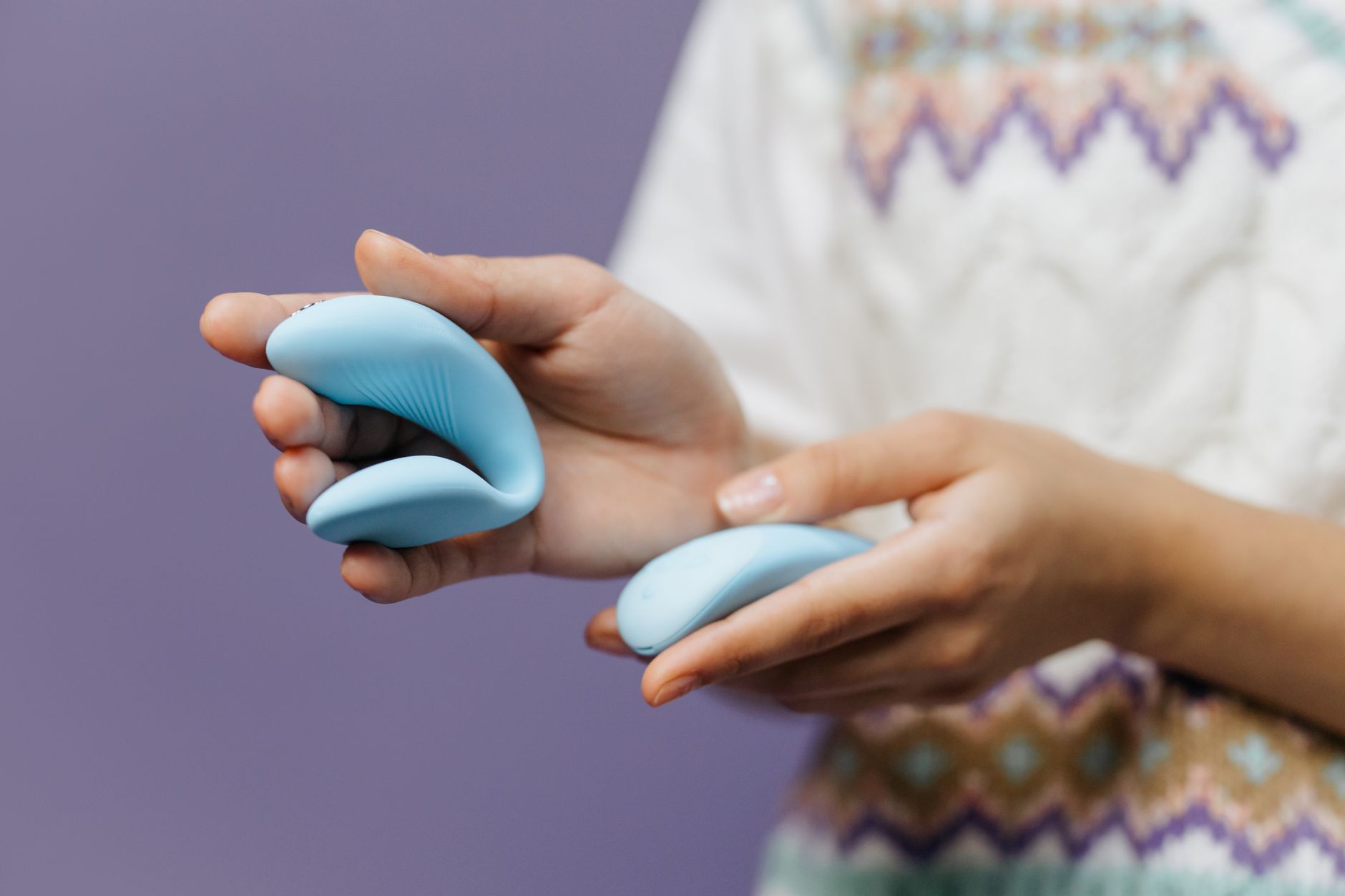
This is where it gets practical. A lemon clitoral vibrator, with its focused suction-and-vibration design, does something traditional vibrators can't quite manage. It delivers consistent, precise stimulation to exactly the tissue that needs it most, without requiring you to build arousal first.
Here's the distinction: when arousal takes time, you need a tool that works without relying on arousal. The Lemon's suction mechanism stimulates nerve endings directly. You don't have to be fully engorged for it to feel good. You don't have to be in a heightened state already. It works with your current state and pulls you forward from there.
Compare that to a traditional vibrator. Those work better when there's already blood flow, already some baseline arousal. They amplify what's already happening. When arousal is slow to start, you're asking a tool to work harder than it's designed to.
With a lemon vibrator, you're meeting your body where it actually is, right now, and letting the stimulation bridge the gap to fuller arousal. That's a fundamentally different strategy, and it changes the whole experience.
The buildup actually gets better, not worse
Here's something counterintuitive: slower arousal doesn't mean weaker pleasure when you finally get there. It often means deeper arousal. When you have to spend twenty minutes building rather than five, you're engaging your brain more fully. You're giving your nervous system time to downregulate stress. You're letting anticipation do its work.
Many of my clients report that their most intense sessions started with tools like lemon clitoral vibrators specifically because the extended buildup creates a kind of compound effect. Your body gets more deeply activated. Your brain gets more signal integration. By the time you reach orgasm, it's more whole-body, more integrated.
The frustration comes from comparing your current timeline to your old one, not from the actual quality of what's happening now. Once you drop that comparison, the extended buildup becomes an asset.
Practical adjustments that work alongside your vibrator
Four tactical shifts make the lemon vibrator even more effective when arousal needs more time.
Warm up without stimulation first. Spend five to ten minutes on anything non-genital that feels good. A bath, massage, foreplay that's tender but not goal-oriented. This lowers cortisol and gets your body into a receptive state before the vibrator enters the picture. When you then introduce the lemon vibrator, you're working from a better baseline.
Start at lower settings. The Lem has multiple intensity levels. Begin at pattern one or two, not the maximum. Let your tissues get accustomed to the sensation. Give your nervous system time to recognize and integrate the input. You'll find that even lower settings feel more pleasurable this way because you're not shocking your system.
Use lube. Water-based lubricant isn't just for comfort. It increases conductivity of stimulation and lets the suction work more effectively. It also signals to your brain that you're moving into sexual territory. That psychological signal matters.
Pair it with breathwork. This is huge and criminally underused. Slow, deep breathing literally lowers cortisol and activates the parasympathetic nervous system. Use a 4-4-4 pattern: inhale for four counts, hold for four, exhale for four. Do this for three to five minutes before you use your lemon vibrator. Your arousal buildup will accelerate noticeably.
When to involve a partner in this shift
If you're partnered, the arousal timeline shift often creates friction because your partner's timeline might not have changed as much, or changed differently. This is a conversation worth having directly.
Separate two things: your arousal speed is not about attraction to your partner. It's about neurology and age. Your partner's patience for the extended timeline is about values and respect, not biology. Those are different discussions.
Some partners love the extended foreplay that comes with slower arousal. Others find it frustrating. Both reactions are valid. The lemon vibrator actually helps here because it lets you build arousal independently and on your own timeline, which takes pressure off the partner to be the sole stimulation source. They can participate, but they're not responsible for triggering something that now requires fifteen minutes instead of five.
The mental piece is just as important
Your brain controls arousal more than your body does. When you're frustrated that arousal is slower, you're literally creating a feedback loop that makes it slower. Frustration triggers cortisol. Cortisol dampens arousal. Slower arousal triggers more frustration.
Break that loop by deciding that fifteen minutes is not a problem to solve. It's the actual timeline now. Make it part of your ritual rather than an obstacle. Some of my clients build in a thirty-minute window specifically for extended foreplay and vibrator use. They're not trying to be faster. They're embracing a slower, often more satisfying version of their sexual life.
Lemon vibrators work so well in this context because they don't fight your biology. They work with it. They acknowledge that arousal now takes longer and provide a tool that's genuinely effective over that longer timeline.
FAQ
Why does arousal take longer when I'm in my 40s and 50s?
Three main reasons. First, blood vessel dilation slows with age, so engorgement takes more time. Second, the nerve pathways in your genitals develop a higher activation threshold, meaning you need more direct or sustained stimulation to trigger response. Third, baseline stress hormones like cortisol tend to be higher in midlife, and elevated cortisol actively dampens sexual arousal at the brain level. None of this is dysfunction. It's a completely normal shift in how your nervous system operates.
Can lemon vibrators actually speed up arousal, or do they just make the waiting better?
Both. A lemon clitoral vibrator works on your tissue directly, which means it can activate arousal even before your body has fully ramped up. So technically it accelerates the process by providing targeted stimulation that doesn't depend on baseline arousal already being present. But the real benefit is that it makes the buildup phase feel good and intentional rather than frustrating. You're not trying to force faster arousal. You're working with your actual timeline.
Is slower arousal a sign of lower desire?
Not at all. Desire and arousal are different systems. You can have strong desire and slow arousal. You can have weak desire and fast arousal. Slower arousal with age is usually a change in the physical speed of the response, not in how much you actually want sex. The brain and the body are decoupling slightly. This is actually common and doesn't predict relationship satisfaction or sexual frequency.
How long should foreplay actually take if my arousal is slower?
There's no universal number, but most people with slower arousal report that fifteen to twenty minutes of buildup feels natural. Some need more, some less. The key is not comparing yourself to how you used to be or how someone else's body works. Your timeline is your timeline. Budget whatever feels unhurried and pleasurable, then use that as your standard going forward.
Can I use a lemon vibrator if I'm also taking antidepressants that slow arousal?
Yes, often quite effectively. Some antidepressants (especially SSRIs) slow arousal at the neurological level. A lemon vibrator works by providing direct tissue stimulation, which can bypass some of that neurological dampening. If you want to explore this specific situation in more depth, check out our guide on why lemon vibrators feel different when taking SSRI antidepressants.
What if my partner gets impatient with the longer arousal timeline?
This is a relationship issue, not a sexual one. A few conversations help. First: clarify that slower arousal isn't about attraction or effort. Second: explain that you're not looking for them to fix it or speed it up. Third: introduce the idea that they can participate in foreplay while you use a lemon vibrator, which lets you build arousal on your timeline while they're still involved. Some partners feel relieved by this because it removes the pressure to be the sole trigger for arousal. Others need to work through feelings about the change. A therapist can help if the conversation gets stuck.
You're not behind. You're just different now.
Every body changes. Arousal timing is one of those shifts that feels personal because it is. But it's not a failure. Your lemon vibrator understands this better than most tools because it works with slow arousal, not against it. Give yourself permission to have a different sexual life than you did at twenty-five. The one you have now, with intention and the right tools, is often deeper.
If you want to explore how this plays out across different scenarios, our guide on how lemon vibrators help when you have reduced arousal from aging digs into similar territory from another angle.
Your pleasure matters. Your timeline matters. And the right approach to both, informed by how your body actually works, changes everything.