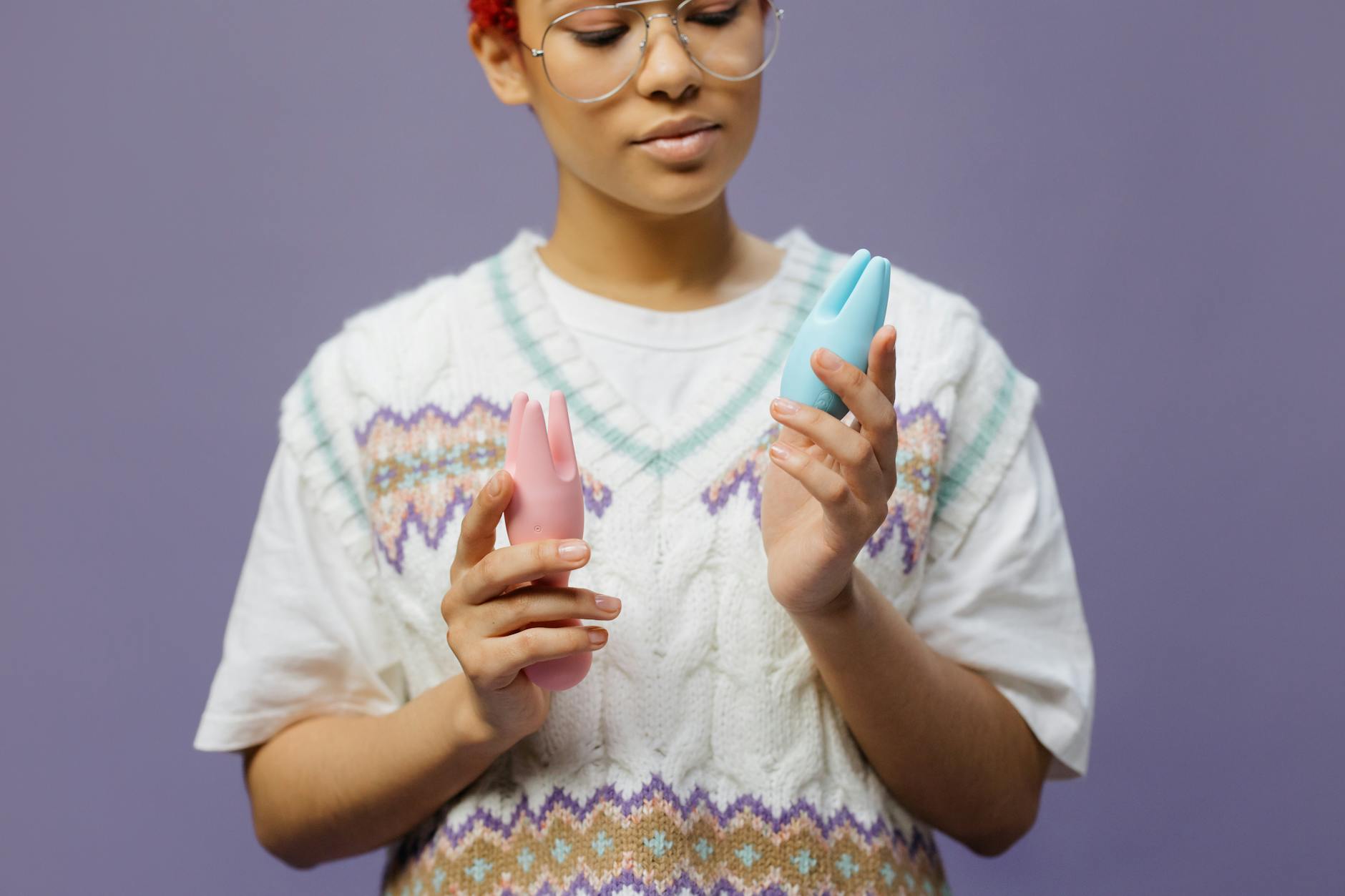
Here's the thing about lemon suction vibrators
They don't vibrate the way you think they do. That's actually their whole point. Instead of buzzing against your clitoris, a lemon sucker uses rhythmic air pulses to create a gentle suction and release pattern. It's closer to the sensation of oral sex than it is to a traditional vibrator, which sounds revolutionary until you actually try one. Then it just sounds obvious.
But obvious doesn't mean it's better for everyone. And that's the conversation we need to have.
How air-pulse technology actually works
When you turn on a lemon vibrator like the Lem, the motor creates waves of air pressure that expand and contract against your clitoral hood. The sensation is gentle stimulation without direct mechanical friction. Your nerve endings respond to the pressure changes, not to vibrations. This means the stimulation pattern bypasses some of the desensitization that happens with traditional vibrators over time.
Traditional clitoral vibrators work differently. They rely on oscillation at various speeds (usually 3,000 to 10,000 RPM depending on the device). Your nerves adapt to steady vibration pretty quickly, which is why people often increase the intensity over weeks or months of use. With air-pulse lemon sexual toys, the sensation feels fresher longer because it's mimicking a different kind of stimulation altogether.
The science here is straightforward. Your clitoris has roughly 8,000 nerve endings. They respond to pressure, texture, and movement differently depending on the type of stimulus. A lemon suction vibrator activates a specific subset of those nerves. Traditional vibrators activate a different subset. Neither is "better" in the abstract. Better depends entirely on your neurology, your sensitivity, and what you're in the mood for.
Who feels the difference most
Let's be direct: air-pulse clitoral vibrators work spectacularly well for people who are sensitive to direct vibration or who've experienced numbness from years of traditional vibrator use. If you've been using the same buzzy toy for five years and orgasms now require maximum intensity, a lemon clitoral vibrator might reset your sensitivity. The novelty of a different sensation type often translates to a faster, more intense response.
They also work particularly well for people with sensitive clitoral tissue. Because there's no grinding motion, just pressure waves, the sensation feels less abrasive. People with vulvodynia, clitoral irritation, or post-menopausal tissue changes often report that suction vibrators feel gentler while still being completely effective.
They're also fantastic if you enjoy the sensation of oral sex and have struggled to find a toy that approximates that feeling. Traditional vibrators are nothing like a mouth. Lemon sucker vibrators, on the other hand, feel remarkably similar to the rhythmic suction and pulsing of actual oral stimulation.
That said, if you're someone who's always had reliable orgasms with traditional vibrators and you like the feeling, there's zero reason to switch. This isn't a hierarchy. It's options.
The texture and positioning factor
One reason air-pulse lemon vibrators feel different has nothing to do with the technology. It's about design. Most lemon sexual toys are shaped like lemons because that shape allows the stimulating surface to cup your clitoris without edges or harsh points. Traditional vibrators often have a flatter tip, which requires you to position yourself more precisely.
With an air-pulse vibrator, you can be a bit messier in your approach and still get great sensation. The suction cup naturally centers itself. This matters more than it sounds if you're the type of person who gets frustrated with repositioning or who struggles to stay still.
The clitoral hood also interacts differently with air-pulse stimulation. Because the tool creates suction against the hood rather than vibrating through it, the clitoris itself is slightly protected. For some people, this is a game-changer. For others, it means they actually prefer more direct stimulation.
Speed and intensity aren't the same thing
A lemon clitoral vibrator typically offers multiple intensity levels, usually 8 to 12 different patterns. But here's what trips people up: a level 3 on an air-pulse toy doesn't feel like a level 3 on a traditional vibrator. The sensation is so different that comparing intensity numbers across device types is basically useless.
Start at the lowest setting on any new lemon suction vibrator. Most people are shocked at how much sensation they feel, even at minimal intensity. Your clitoris doesn't need a powerful motor to respond to air pulses. The gentleness is a feature, not a limitation.
Lemon sucker vibrators versus traditional vibrators: the real comparison
Sensitivity: Air-pulse toys are gentler and tend to feel less numbing over time. Traditional vibrators have more immediate intensity options for people who like that.
Sensation type: Lemon vibrators approximate oral sex. Traditional vibrators are distinctly vibrator. Neither is wrong.
Longevity of sensation: Air-pulse technology stays novel longer because the sensation type is less common. Traditional vibrators require more intensity escalation over time.
Positioning: Lemon suction vibrators are more forgiving. They work well even if your angle isn't perfect.
Price: Air-pulse lemon clitoral vibrators typically cost slightly more than entry-level traditional vibrators but are comparable to mid-range buzzy toys.
Noise: Both are reasonably quiet, though air-pulse toys tend to have a subtle whooshing sound rather than a buzz.
The best-case scenario for switching
If you're considering a lemon sucker vibrator, the ideal situation is this: you have reliable orgasms with traditional vibrators, but you're curious about a different sensation. You're not trying to fix a problem. You're exploring. That's exactly when trying something completely different tends to feel amazing.
You have nothing to unlearn and no frustration to work through. You're just adding a new tool to your collection. The novelty plus the genuinely different sensation usually creates a surprisingly intense experience.
The honest limitation
Let me be clear about one thing: a lemon clitoral vibrator is not a magic solution for difficulty orgasming. Neither is any other toy. If you have anorgasmia or delayed orgasm, the issue is usually physical, psychological, relational, or some combination of the three. A new device might help you explore sensation differently, but it's not a substitute for understanding what's actually getting in your way.
That said, sometimes the emotional experience of trying something genuinely new and different does create the headspace that makes arousal possible. So it's worth trying. Just go in with realistic expectations.
What to expect on your first use
Charge your lemon vibrator fully before your first session. Start with a clean toy and clean hands. Use it somewhere private where you won't feel rushed. Begin at the lowest intensity setting and spend at least five to ten minutes exploring. Let yourself get used to the sensation before you jump to higher levels.
Lemon sexual toys work best when you're already somewhat aroused. The suction creates a seal against your clitoral hood, so a bit of natural lubrication helps. If you want extra glide, use a water-based lube. Silicone-based lubes can damage silicone toys.
Many people orgasm on their first try. Some find it takes a few sessions to figure out exactly where and how to position the toy for maximum sensation. Both are completely normal. Your clitoris will tell you what it likes once you give it a chance to speak.
FAQ: Lemon Sucker Vibrators and Air-Pulse Clitoral Toys
Is a lemon suction vibrator better if I've never had an orgasm?
Not necessarily better, but potentially helpful. If traditional vibrators have left you numb or frustrated, the completely different sensation of a lemon clitoral vibrator might work better for your neurology. If you haven't tried any vibrator yet, start with a mid-range option and see what you prefer. The best toy is the one that actually gets you off.
Can you use a lemon sucker vibrator during partnered sex?
Absolutely. Many couples use them during penetrative sex or during foreplay together. Some people find that the sensations combine in interesting ways. The main thing is communication about what feels good and what gets in the way.
Do lemon vibrators feel exactly like oral sex?
They approximate it pretty closely, especially in terms of the suction and pulsing sensations. They don't replicate the warmth, texture, or variability of a real mouth, but they capture the rhythm well enough that many people find the similarity striking.
How often can you use a lemon clitoral vibrator?
As often as you want. Daily use is fine and won't damage your toy or your sensitivity. Some people use them multiple times a day. Others use them occasionally. There's no "too much."
What's the lifespan of a lemon suction vibrator?
They typically last 3 to 5 years with proper care, sometimes longer. Charge regularly, store in a cool dry place, and clean after each use. Avoid dropping them or exposing them to extreme temperatures.
Can lemon sucker vibrators cause desensitization?
It's much less common with air-pulse technology than with traditional vibrators, but not impossible. If you notice you're needing longer sessions over time, take a break for a few weeks and come back to it. Your sensitivity usually resets quickly.
The bottom line
A lemon clitoral vibrator isn't universally better than traditional vibrators. It's a different tool that works spectacularly well for some people and doesn't click for others. The way to know which category you fall into is to try one. If you're curious, the stakes are low. If it works, you've found something genuinely new. If it doesn't, you've learned something about what you actually prefer.
That's useful information either way. And in my work with couples and individuals navigating pleasure, useful information is how you build confidence. Your satisfaction matters, and finding the tools that support it is part of honoring that.